Water Heater Repair or Replacement: Making the Call
Water heater repair usually makes sense when the tank is sound and the fault is limited. Replacement is the better choice when the tank leaks, damage keeps returning, or repair costs no longer fit the unit’s condition; PlumbingKentwa.com can inspect the system and explain the options.
Request an EstimateHow Repair and Replacement Compare
Water heater repair usually has the lower immediate cost, while replacement offers a longer-term solution when the unit has serious or repeated problems. The right choice depends on the tank condition, failed part, hot water demand, and future reliability.
Our Water Heater Repair service starts with diagnosis. We then explain whether repair or replacement better fits the water heating system.
| Factor | Water Heater Repair | Water Heater Replacement |
|---|---|---|
| Immediate cost | Usually lower when one component has failed. | Usually higher because equipment and installation are included. |
| Timeline | Often involves a focused repair after diagnosis. | Requires equipment selection and installation planning. |
| Maintenance | Keeps the existing system in service. | Starts a new maintenance history. |
| Tank condition | Best when the tank remains sound. | Best when the tank leaks or has extensive corrosion. |
| Best for | A localized fault and a short-term service decision. | Tank failure, recurring problems, or changing household needs. |
When Water Heater Repair Makes Sense
Water heater repair makes sense when the tank remains sound and one repairable component causes the problem. Our team checks the failure before recommending a fix.
A failed heating element can limit hot water in an electric water heater. A faulty thermostat can cause poor temperature control. A pressure relief valve, gas control valve, or electrical connection can also need service.
A water leak needs careful evaluation. Water from a fitting or valve may be repairable, but a leaking storage tank often points to tank failure.
Advantages of Repairing a Water Heater
Water Heater Repair Is Best For
Water heater repair is best for a localized fault in a sound tank. This approach can suit a short-term service decision when the unit still meets household needs.
Our team reviews the maintenance history and checks related connections. We also look for signs that the same failure may return.
When Water Heater Replacement Makes Sense
Water heater replacement makes sense when the tank leaks, corrosion is extensive, failures keep returning, or the unit no longer meets household needs. A leaking tank cannot be restored by replacing an external part.
Tank corrosion can weaken the storage tank and nearby water connections. Obsolete parts can also make future repairs harder. Capacity, energy use, venting, and installation requirements may support choosing a new unit.
Replacement options include a storage tank water heater and a tankless water heater. Our team matches the replacement unit to hot water demand, available space, and safe installation requirements.
Advantages of Replacing a Water Heater
Water Heater Replacement Is Best For
Water heater replacement is best for tank failure, repeated repairs, or a poor fit for the household. It is a long-term ownership decision that considers reliability and future hot water use.
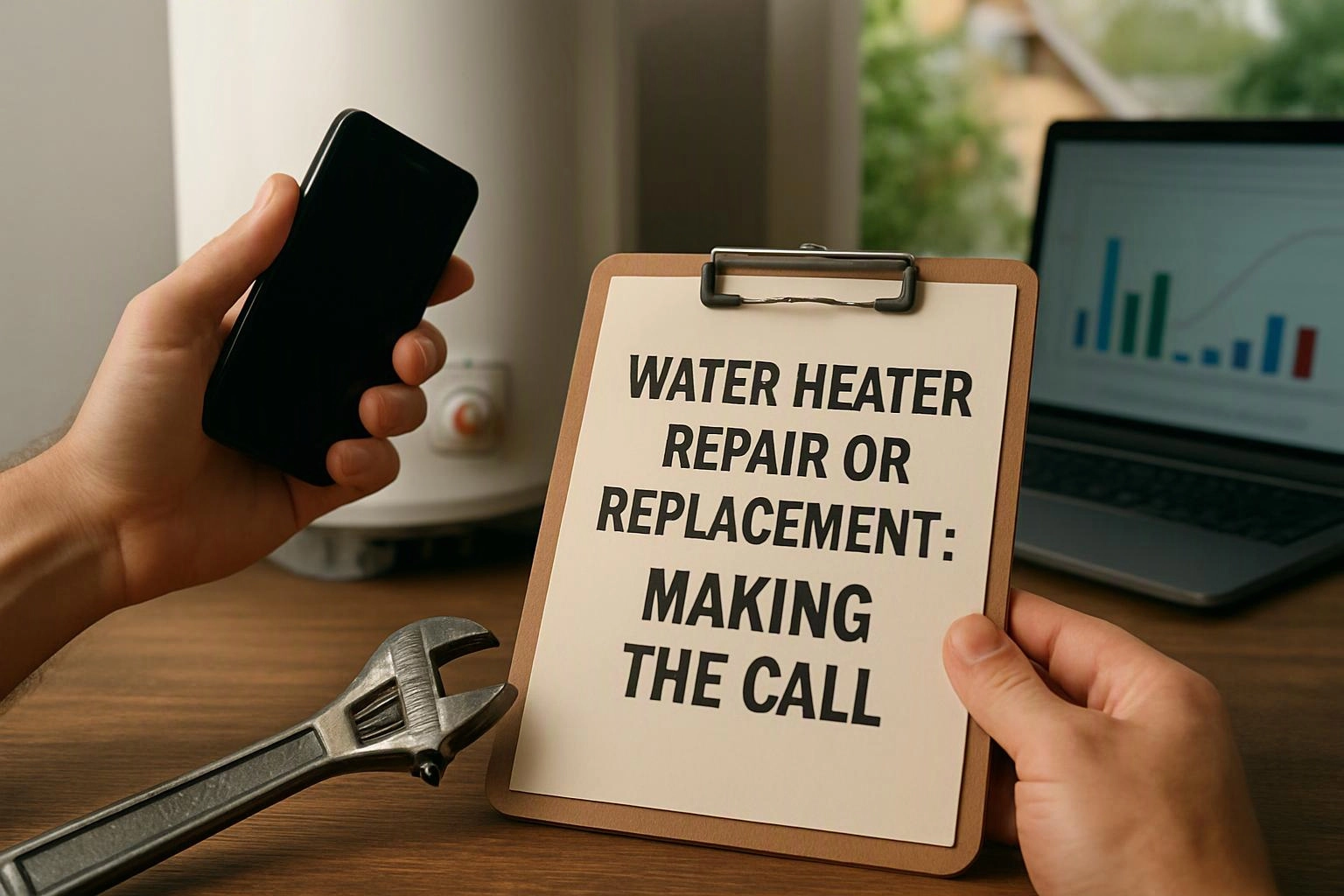
Our team checks the existing installation before selecting equipment. We review access, connections, venting, and the space needed for safe operation.
What Changes a Water Heater Repair Quote
A water heater repair quote changes with the failed part, access conditions, connection type, related damage, and work needed to restore safe operation. Diagnostic work comes first because symptoms can come from more than one component.
Our team considers the water shutoff, gas or electrical connection, drain pan, and access around the unit. Code-related work may also affect the repair scope.
To request an exact quote, share the symptoms and maintenance history with our team. We inspect the water heater and explain the needed labor and materials.
What a Water Heater Replacement Estimate Should Include
A water heater replacement estimate should identify the equipment, installation work, required materials, related code work, disposal, and warranty terms. Clear details help you compare the full replacement scope.
Our team explains each part of the replacement estimate before work begins. The estimate should also show any conditions that could change the installation requirements.
How We Decide Between Repair and Replacement
We inspect the water heater, identify the failure, assess the tank and connections, then explain whether repair or replacement better fits the system. Our decision starts with condition, not with a preset recommendation.
Our inspection reviews tank condition, failure diagnosis, repair scope, and replacement scope. We also complete a safety check and consider hot water demand.
We review gas water heater and electric water heater requirements separately. We check venting, electrical connections, water pressure, shutoff valves, and maintenance history before explaining the options.
What to Do When a Water Heater Fails
A water heater failure needs a safety-first response, especially when water, gas, or electricity is involved. Stop using the unit when conditions appear unsafe.
Our team can assess the failure and explain the safe repair or replacement path. Regulated gas, plumbing, and electrical work should be handled by licensed professionals.