Tank vs. Tankless Water Heaters: Types, Maintenance, and Repair Signs
Tank water heaters store heated water, while tankless models heat water on demand. PlumbingKentwa.com compares both systems, explains maintenance needs, and identifies repair or replacement signs.
Request an EstimateWhat Is the Difference Between Tank and Tankless Water Heaters?
Tank water heaters store heated water in an insulated storage tank. A tank water heater uses a burner or heating element to warm the water and keep it ready for use.
A tankless water heater heats water as it flows through the unit. This on-demand heating can provide hot water without storing a full tank, but the unit must match the home's flow needs.
Tank models can supply several fixtures from stored hot water until the tank is depleted. Tankless models provide hot water as needed, but peak demand, water flow, and fuel source affect their output.
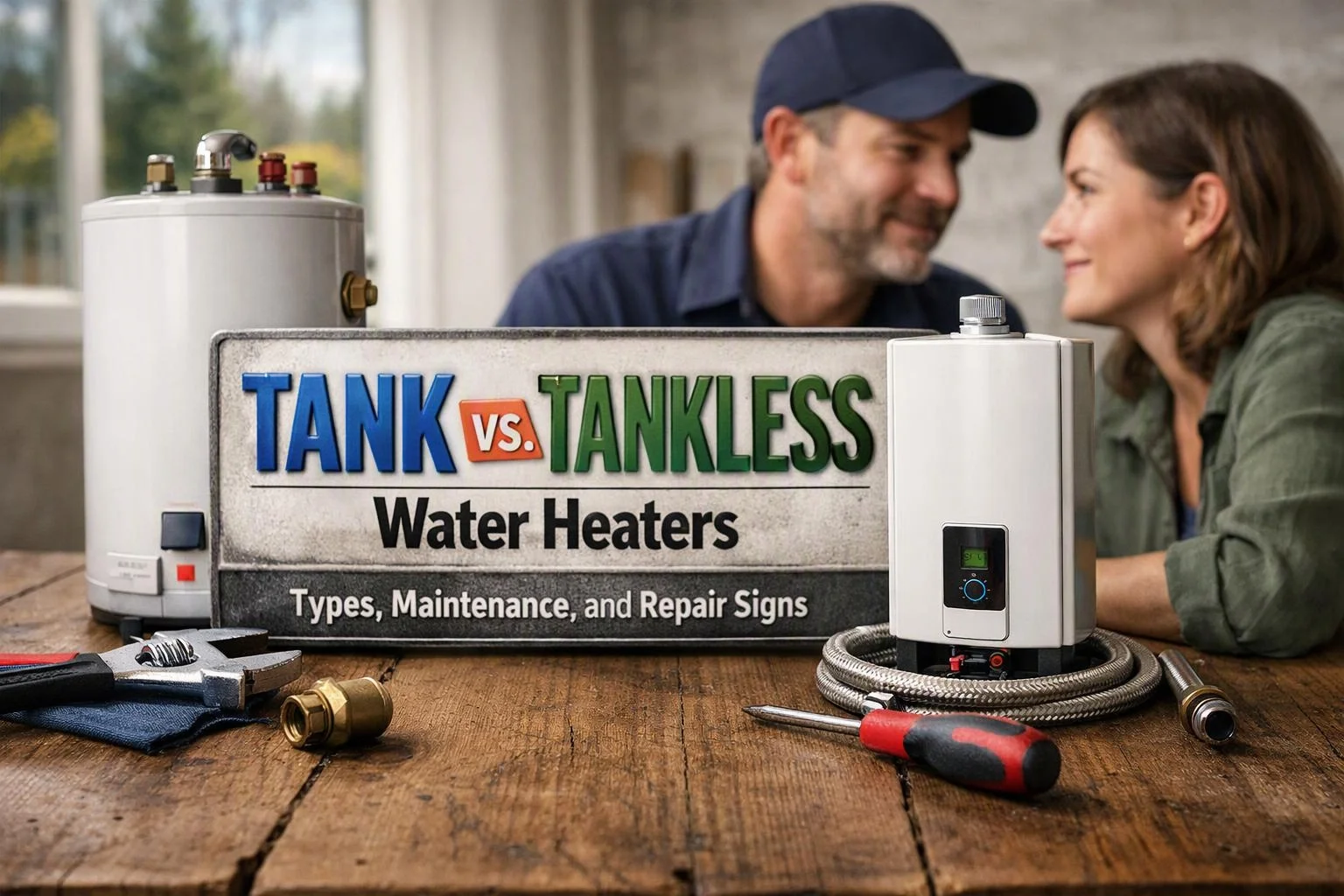
How Do Tank and Tankless Water Heaters Compare?
Tank and tankless water heaters differ in how they heat, store, and deliver hot water. The right choice depends on household demand, available space, and installation conditions.
Both systems need proper sizing and regular maintenance. Their energy use and repair needs can also change with the fuel source and water quality.
| Water heater type | Energy use | Hot water availability | Space requirements | Maintenance | Installation |
|---|---|---|---|---|---|
| Stores heated water in a tank. | Uses energy to heat and maintain stored water. | Supply depends on tank capacity and recovery. | Needs room for the storage tank and service access. | May need flushing, anode checks, and safety testing. | Connects to water, fuel, venting, or electrical systems. |
| Heats water as it flows through the unit. | Heats water during use instead of storing a heated supply. | Provides hot water while flow and capacity stay within design limits. | Usually needs less storage space but requires service clearance. | May need heat exchanger cleaning and water filter care. | May require changes to gas, electrical, water, or venting connections. |
Which Water Heater Fits Your Household?
The better water heater depends on hot water demand, available space, fuel source, installation conditions, and maintenance preferences.
A tank water heater may suit households with steady demand and space for storage. A tankless water heater may suit homes that value compact equipment and on-demand heating.
Peak hot water use matters when several fixtures operate together. Our team reviews household demand, water flow, fuel source, venting, electrical needs, and long-term ownership goals before recommending water heater installation.
What Maintenance Does Each Water Heater Need?
Each water heating system needs maintenance that matches its design. Regular service helps reveal sediment buildup, scale buildup, corrosion, and failing safety parts.
Our team follows the manufacturer maintenance schedule and checks the parts that affect safe heating and hot water delivery.
What Causes a Water Heater to Make a Rumbling Noise?
Sediment buildup commonly causes a tank water heater to rumble as trapped water heats beneath the deposits.
Minerals can settle at the bottom of a storage tank. During the heating cycle, trapped water can bubble through the sediment and create popping or rumbling sounds.
A rumbling noise can also point to overheating, a burner problem, or tank damage. Our team checks the burner, tank condition, temperature control, and other related parts before recommending water heater repair.
What Are the Signs a Water Heater Needs Repair?
A water heater may need repair when it leaks, makes unusual sounds, produces discolored water, or fails to heat consistently.
A water leak around the tank, fittings, or relief valve needs prompt attention. Inadequate hot water, sudden temperature changes, and discolored water can also signal an internal or control problem.
An error code can point to a tankless system fault. A pilot light that won't stay lit, a tripped breaker, or a pressure relief valve that releases water also deserves inspection.
We inspect the complete system through our Water Heater Repair service and connect the repair recommendation to the actual cause.
Should You Repair or Replace Your Water Heater?
Repair is usually considered when one replaceable part has failed, while replacement becomes more suitable when the tank is corroded or major components keep failing.
A leaking tank often indicates internal damage that a part replacement won't solve. Corrosion, repeated repair history, poor system condition, and incompatible replacement parts can also support replacement.
Our team compares the failed component, tank or heat exchanger condition, repair history, safety concerns, and replacement compatibility. We explain what the system needs so you can choose between water heater repair and water heater replacement with clear information.
How We Check and Service a Water Heater
Our water heater inspection checks the appliance, its connections, and the conditions that affect safe operation. We use the findings to separate a repairable fault from a larger system problem.
Our team explains the recommended work and the factors that shape the quote before service begins.
What Should You Do When a Water Heater Shows a Warning Sign?
Stop using a water heater with a serious leak, gas odor, or electrical problem and contact PlumbingKentwa.com for safe inspection.
Water heater safety comes first when water reaches electrical parts or a gas odor is present. Move away from danger, avoid operating switches near a gas odor, and contact the appropriate emergency service when immediate danger exists.
If the situation is safe, use the appliance shutoff controls only as directed by the equipment instructions. Our team can inspect the water heater, identify the fault, and explain the next safe step.
For a service review, contact our team and tell us what warning sign you noticed.
Questions About Tank and Tankless Water Heaters
Can a tankless water heater run out of hot water?
Yes, a tankless water heater can stop meeting demand when simultaneous flow exceeds its heating capacity. Water flow, incoming water temperature, fuel source, and unit size affect the available hot water.
Why does my water heater have hot water in some fixtures but not others?
Hot water in some fixtures but not others can result from a local fixture problem, restricted flow, plumbing crossover, or water heater capacity issue. Our team tests the affected fixtures and the water heating system to locate the cause.
Is a leaking water heater safe to keep using?
No, a leaking water heater isn't safe to keep using without inspection. Water can damage nearby areas, and leaks near gas or electrical parts can create added hazards.
Can hard water damage a tankless water heater?
Yes, hard water can cause scale buildup inside a tankless water heater's heat exchanger. Scale can restrict flow and reduce heating performance, so the unit may need cleaning and water quality control.