Tank vs. Tankless Water Heaters: Compare Installation Options
Tank water heaters usually offer simpler replacement planning, while tankless systems can suit homes that want on-demand hot water and have the required gas, electrical, and plumbing capacity. PlumbingKentwa.com checks the home, explains installation needs, and prepares a quote based on the selected system and site conditions.
Request an EstimateTank vs. Tankless Water Heater Installation at a Glance
Tank and tankless water heaters solve the same household need, but their installation needs differ. A tank water heater often follows the existing setup, while a tankless model may need utility upgrades.
Our Water Heater Installation service starts with the home’s equipment, utilities, layout, and hot water use.
- Tank water heater: Best for familiar equipment, stored hot water, and simpler replacement planning.
- Tankless water heater: Best for on-demand heating when gas, electrical, venting, and water flow support the system.
| Factor | Tank Water Heater | Tankless Water Heater | Installation Focus |
|---|---|---|---|
| Installation cost | Often lower when connections and venting match the existing system | Can be higher when utility upgrades or relocation are needed | Equipment, access, piping, utilities, permits, and inspections |
| Timeline | Often simpler for a compatible replacement | May require more planning and installation work | Existing conditions determine the work involved |
| Maintenance | Tank flushing and safety checks may be needed | Descaling and system checks may be needed | Maintenance depends on water conditions and equipment |
| Best for | Homes seeking familiar equipment and stored hot water | Homes seeking on-demand heating and suitable utility capacity | Household demand and installation constraints |
How Tank Water Heater Installation Works
A tank water heater stores heated water in an insulated storage tank. Our team connects the unit to the home’s water piping, fuel source, and safety controls.
Installation includes checking the shutoff valve, water connections, temperature and pressure relief valve, drain pan, drain valve, and venting. We also review the mounting area, access, and safe removal of the existing unit.
Gas tank models use a burner and gas valve, while electric tank models use heating elements. The fuel source affects the connections and safety checks required.
Why Choose a Tank Water Heater?
A tank water heater is often best for households that want familiar equipment and a more direct replacement path. The existing water connections, venting, and fuel source may already suit the replacement.
Stored hot water can support normal household demand, but the tank’s capacity and recovery rate still need to match usage.
Best for: A tank water heater suits homes that value familiar equipment, stored hot water, and simpler replacement planning.
How Tankless Water Heater Installation Works
A tankless water heater heats water as fixtures call for hot water. This on-demand heating method removes the need for a storage tank.
Our team checks gas line capacity, the electrical circuit, the venting system, water flow, and the mounting location. Gas tankless units may need gas line installation or changes to the existing line.
We also review water piping and maintenance access. The unit must have a safe route for venting and enough flow to operate correctly.
Why Choose a Tankless Water Heater?
A tankless water heater is often best for households that value on-demand heating and have a suitable installation location and utility supply.
Tankless equipment can provide continuous hot water when the system receives enough water flow and utility capacity. The unit is usually wall-mounted, which can change access and piping needs.
Best for: A tankless water heater suits homes with suitable utilities, space, water flow, and a preference for on-demand heating.
Do Tankless Water Heaters Need Plumbing or Gas Line Changes?
Yes, a tankless conversion may need plumbing, gas, electrical, or venting changes when existing systems cannot support the new heater.
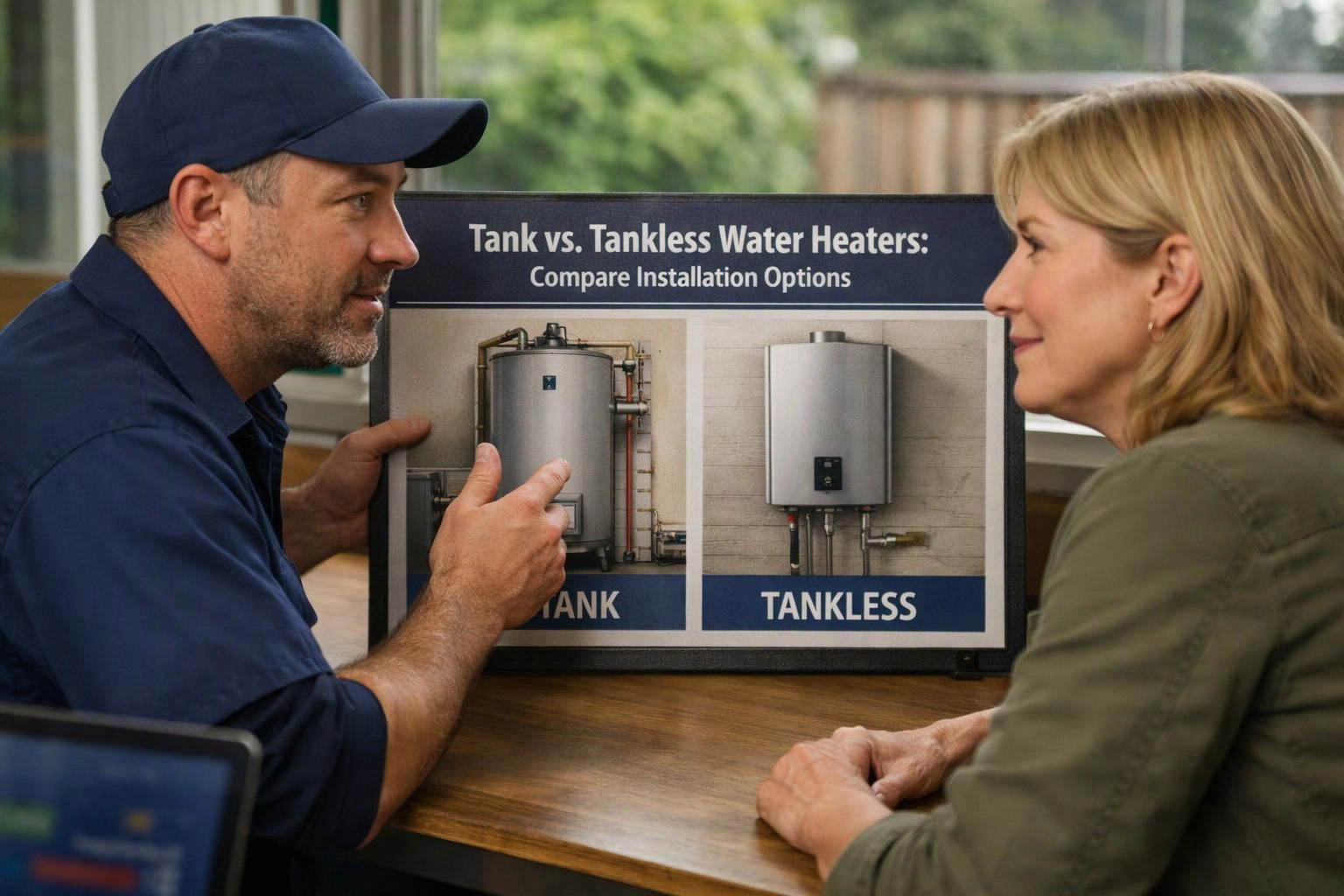
Gas line capacity matters because a tankless unit may have different gas demand from the existing heater. Our team may recommend gas line installation when the current supply cannot meet the equipment requirements.
Water piping may need relocation, and the electrical supply may need a suitable circuit. Venting conversion can also be required because tankless equipment may use a different venting system.
We review these conditions before preparing the installation estimate. Regulated gas, plumbing, and electrical work should be completed by PlumbingKentwa.com, not handled as a do-it-yourself project.
What Changes the Cost of Tankless Water Heater Installation?
Tankless installation cost depends on the heater, utility upgrades, venting, piping changes, access, and required inspection work.
Equipment selection affects the needed gas supply, electrical supply, water flow, and venting. Gas line work, electrical upgrades, and venting changes can add installation steps.
Water pipe relocation and difficult access can also affect labor. Permit and inspection requirements depend on the work and local rules.
Our installation estimate explains the selected equipment, the planned work, required safety items, and any utility upgrades. We provide an exact quote after reviewing the site conditions.
What Should a Water Heater Replacement Estimate Include?
A water heater replacement estimate should identify the equipment, installation work, utility changes, safety items, and required inspection steps.
We separate the main work from site-specific changes so you can understand the scope before installation begins.
How We Assess the Right Installation Option
We assess household hot water demand, the existing water heater, fuel type, and the available utilities before recommending a system.
Our team checks gas supply, the electrical panel, venting route, water piping, and installation location. We also look at access and the space needed for service and maintenance.
These checks help us identify installation constraints before water heater replacement begins. We then explain the practical differences between a tank water heater and a tankless water heater.
Which Water Heater Installation Option Fits Your Home?
The better option depends on hot water use, available utilities, installation changes, maintenance preferences, and the home's layout.
A tank water heater may fit direct replacement planning when the existing connections and fuel source remain suitable. A tankless water heater may fit homes that want on-demand heating and can support the required gas, electrical, venting, and water flow needs.
Our team reviews these factors and prepares a quote for the selected system and site conditions. We also explain permits, inspections, safety checks, removal, disposal, and utility upgrades included in the planned work.
Questions About Tank and Tankless Water Heaters
Can a tankless water heater replace any tank water heater?
No, a tankless water heater can replace a tank system only when the home supports its gas, electrical, venting, water flow, and mounting needs.
Does a tankless water heater need its own electrical circuit?
Yes, a tankless water heater may need a suitable electrical circuit, even when the main heating source is gas. Our team checks the electrical supply before installation.
Is tankless water heater maintenance different from tank maintenance?
Yes, tankless water heater maintenance commonly focuses on descaling, heat exchanger condition, filters, and system checks. Tank maintenance commonly includes flushing, valve checks, and inspection of the drain pan.
Can a tankless water heater supply enough hot water for a whole home?
Yes, a tankless water heater can supply whole-home hot water when its water flow, utility supply, and equipment capacity match household demand.