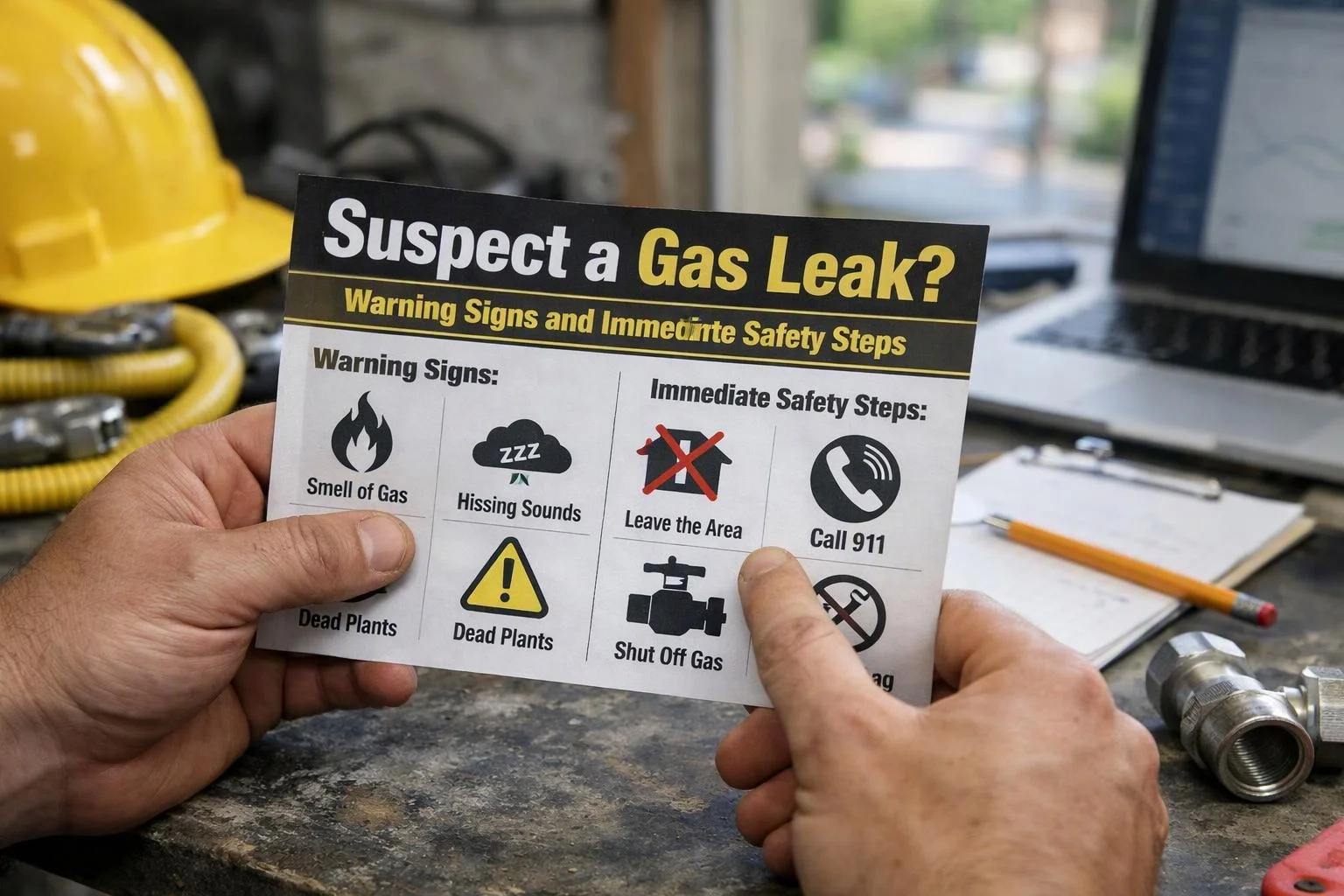
Suspect a Gas Leak? Warning Signs and Immediate Safety Steps
Gas leak warning signs include a rotten-egg odor, hissing or roaring sounds, bubbling water, and dying vegetation. Leave immediately without using switches or flames, call emergency services from outside, and contact PlumbingKentwa.com for gas line repair. Our team helps verify gas line problems and plan safe repairs.
Request an EstimateWhat Are the Warning Signs of a Gas Leak?
Natural gas is normally odorless, but a safety odorant gives it a rotten-egg smell. Gas leak warning signs can also include unusual sounds, dead vegetation, and physical symptoms.
A suspected gas leak may come from a gas appliance, a fitting, or a damaged gas line. Treat any unusual gas sign as a plumbing hazard and move toward safety.
How Gas Leak Signs Compare
| Sign | What it may indicate | Common setting |
|---|---|---|
| Rotten-egg odor | A natural gas leak or suspected gas release | Indoor gas leak or outdoor gas leak |
| Hissing sound | Gas escaping from a pipe, fitting, valve, or connector | Near a gas appliance or gas line |
| Roaring sound | A larger or faster gas escape | Indoor or outdoor gas line |
| Bubbling water | Gas moving through wet soil near an underground line | Outdoor gas leak |
| Dying vegetation | A possible underground gas line leak | Outdoor gas leak |
Physical symptoms can include headache, dizziness, nausea, or unusual tiredness. Leave the building when symptoms occur with a gas odor or other warning sign.
Which Gas Leak Red Flags Mean You Should Leave?
Leave the building immediately when you smell strong gas, hear a loud leak, see outdoor disturbance, or feel unwell.
Do not stay inside to identify the leak source. A gas escape can spread through rooms, soil, or enclosed spaces without clear warning.
Do not assume an odor is harmless because it fades. Gas movement and ventilation can change quickly.
What Should You Do Before Leaving a Suspected Gas Leak?
Before leaving a suspected gas leak, avoid flames, electrical switches, and actions that could create a spark.
Keep the response simple and focus on getting every occupant and pet outside safely. Do not pause to search for the leak.
Do not open or close windows as part of a leak investigation. Moving through the property should take priority over ventilation.
What Should You Do While Leaving the Property?
During evacuation, leave calmly by foot and avoid anything that could become an ignition source.
Warn others only from a safe position. Do not return for belongings, tools, or vehicles.
Do not use a vehicle to leave if it requires starting the engine near leaking gas. Walk away first, then make the emergency call.
What Should You Do After Reaching Safety?
After reaching a safe location, call emergency services from outside and report the suspected gas leak.
Keep people away until emergency responders or the gas utility says the area is safe. Our team can address gas line repair after the immediate danger is controlled.
Emergency services handle immediate danger and evacuation decisions. We handle the plumbing investigation and repair after the site is safe to enter.
Why You Shouldn't Locate or Repair a Gas Leak Yourself
Gas leak detection and gas line repair require controlled testing, proper tools, and regulated plumbing work.
Searching for a leak can expose you to gas or spread the hazard. Digging, tightening a fitting, or using an electrical device can also create an ignition risk.
A licensed plumber evaluates the gas pipe, fitting, valve, connector, and appliance line without turning a suspected gas release into a larger emergency. Our team uses a professional inspection process and follows safe work practices for gas systems.
Use our Gas Line Repair service when the gas utility or emergency responders have cleared the property for plumbing work.
How We Check and Repair Gas Line Problems
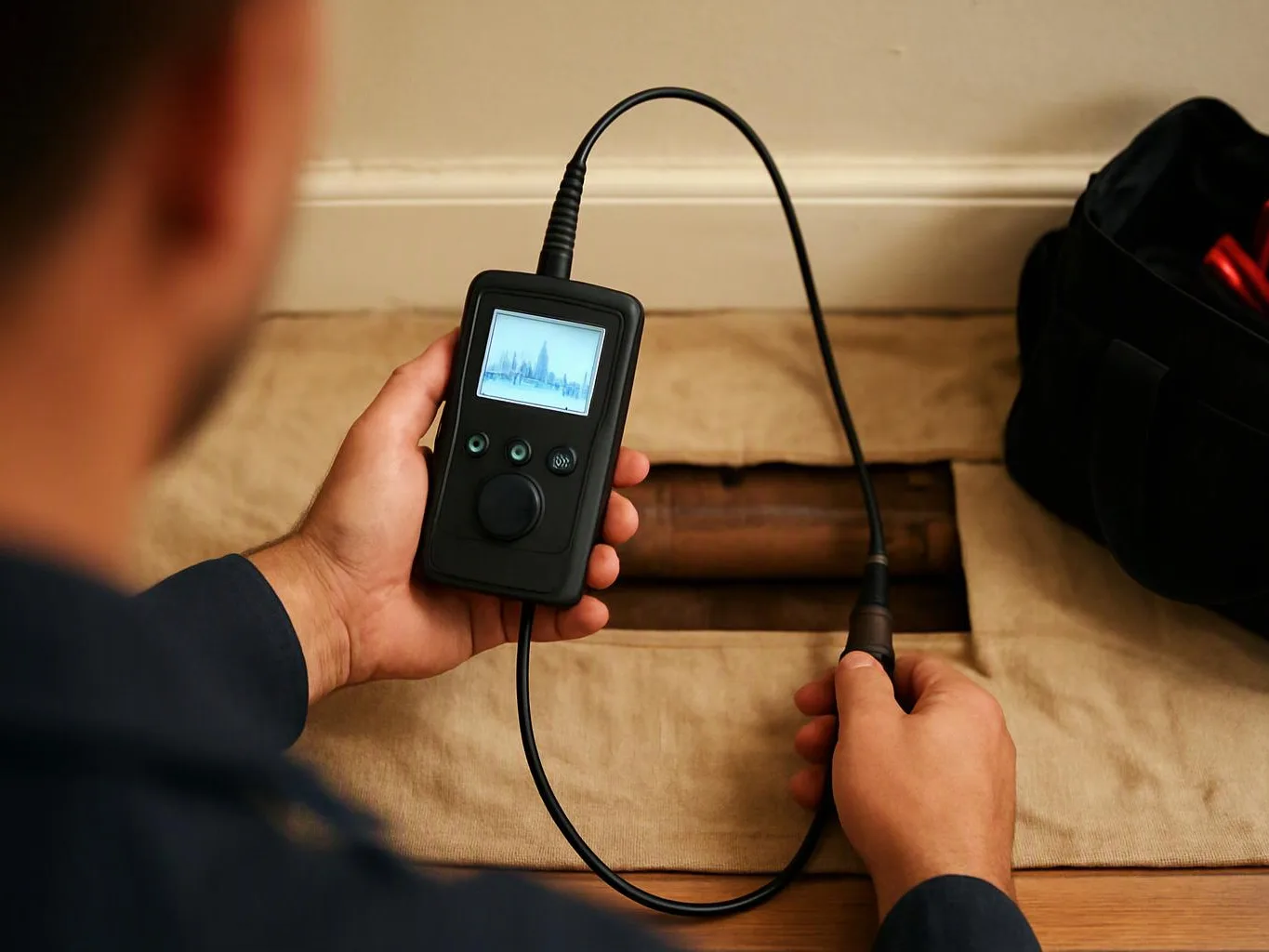
We check gas line problems by reviewing the system, performing leak detection, and matching repairs to code requirements.
At PlumbingKentwa.com, we inspect the accessible gas line, gas appliance connections, fittings, valves, and nearby conditions. We explain what we find before recommending gas line repair or gas line installation.
Our process can include pressure testing when appropriate, controlled checks for the leak source, and an assessment of pipe condition. We also review installation details against applicable code requirements and inspection criteria.
The work may involve repairing a damaged section, replacing a corroded pipe, correcting a loose connection, or installing a properly sized gas line. The exact quote depends on the location, access, materials, system condition, and required corrective work.
When to Request Gas Line Repair
Request gas line repair when a damaged gas line, corroded pipe, loose connection, or gas appliance connection may be leaking.
Contact emergency plumbing services first when you smell gas or hear an active leak. After the area is safe, our team can inspect the system and explain the repair options.
Gas line work may also be needed after appliance changes, remodeling, ground movement, or visible pipe damage. We can discuss gas line installation when an existing line cannot safely support the planned appliance.
Questions About Suspected Gas Leaks
Can a gas leak make you feel sick?
Yes, a gas leak can make you feel sick through symptoms such as headache, dizziness, nausea, or unusual tiredness. Leave the area and call emergency services from outside if symptoms occur with a gas odor or other warning sign.
How can you tell whether a gas odor is coming from an appliance or a gas line?
You can't safely identify the source of a gas odor by inspecting the appliance or gas line yourself. Leave the area first, then let emergency responders, the gas utility, or our team perform a controlled inspection after the property is safe.
Should you turn off the gas meter during a suspected leak?
No, you shouldn't approach or operate the gas meter during an active suspected leak if doing so could delay evacuation or expose you to danger. Leave immediately and follow instructions from emergency services or the gas utility.