Plumbing Leak Detection: Signs, Tools, and What to Expect
Plumbing leak detection combines water-use checks, pressure testing, acoustic listening, thermal imaging, and visual inspection. At PlumbingKentwa.com, we use the findings to identify the leak source and recommend leak detection, slab leak repair, or pipe repair.
Request an EstimateWhat Are the First Signs of a Plumbing Leak?
Plumbing leaks often show up through damp areas, water stains, musty odors, unusual sounds, and unexplained changes in water use.
Water stains may appear on walls, ceilings, or flooring. Damp walls and wet flooring can point to water moving behind a surface. Mold or mildew may develop when moisture remains hidden.
A musty smell, dripping sound, or unexplained water use also deserves attention. Low water pressure can signal a leak, but clogged pipes and fixture problems can cause similar symptoms.
Early leak detection can help limit water damage and reduce the need for broad demolition. We trace the signs back to the likely leak location.
How Do Plumbers Detect a Water Leak?
Plumbing leak detection starts with a visual inspection and water-use review, then uses targeted tests to locate hidden water.
What Happens During the Inspection?
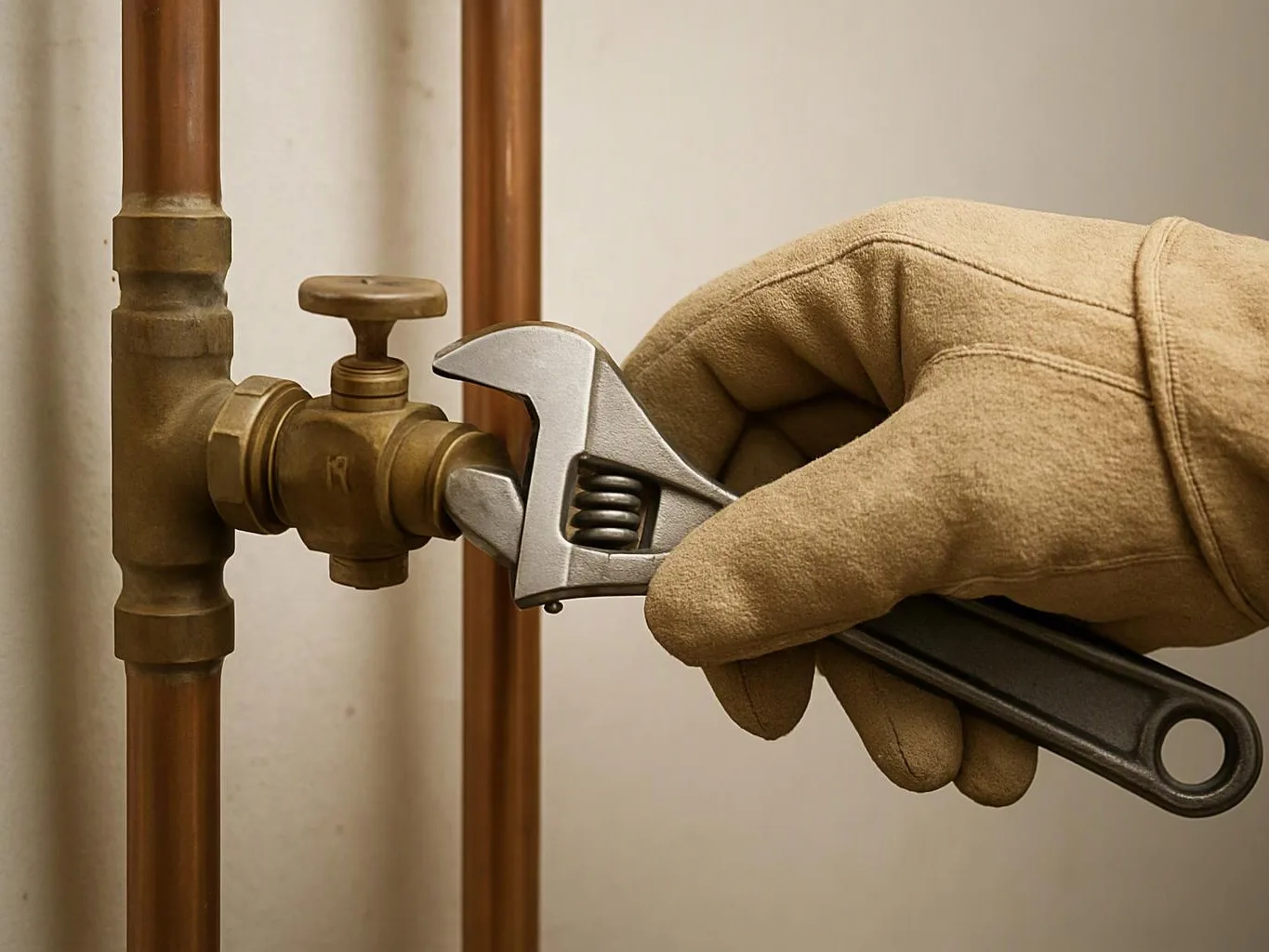
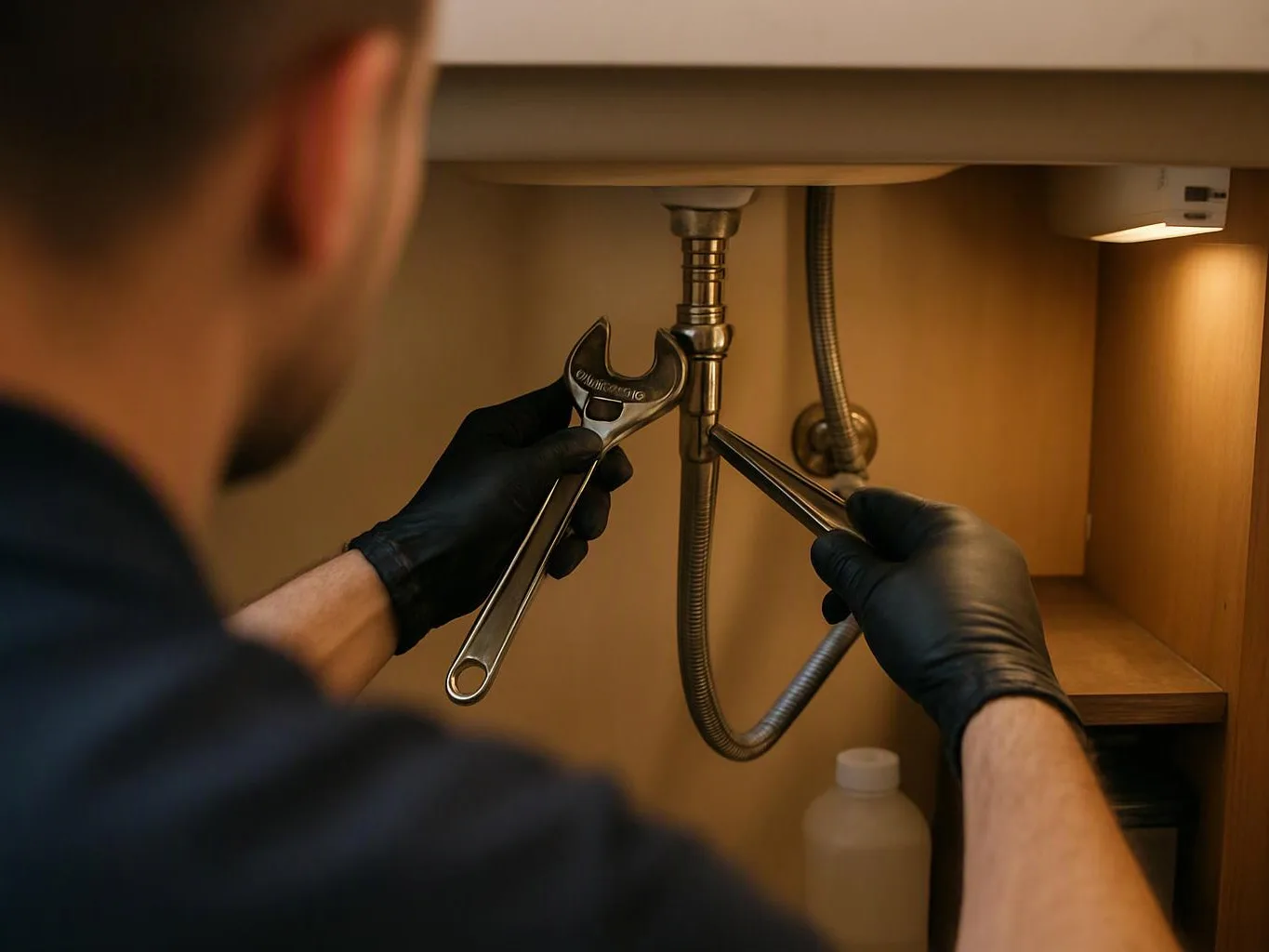
Our inspection covers fixture connections, supply lines, drain lines, shutoff valves, and nearby building surfaces.
We look at walls, ceilings, and flooring for staining, dampness, and changes in material. We also compare the visible evidence with water meter and pressure findings.
This targeted inspection helps us plan the smallest practical repair access. We explain what the evidence shows before any opening or repair work begins.
Which Tools Are Used for Plumbing Leak Detection?
Leak detection tools reveal sound, heat, moisture, pressure, or pipe conditions that help identify the leak location.
We select tools based on the symptom, pipe location, and building surfaces involved. No single tool confirms every type of leak.
| Tool | What it can reveal | Common use |
|---|---|---|
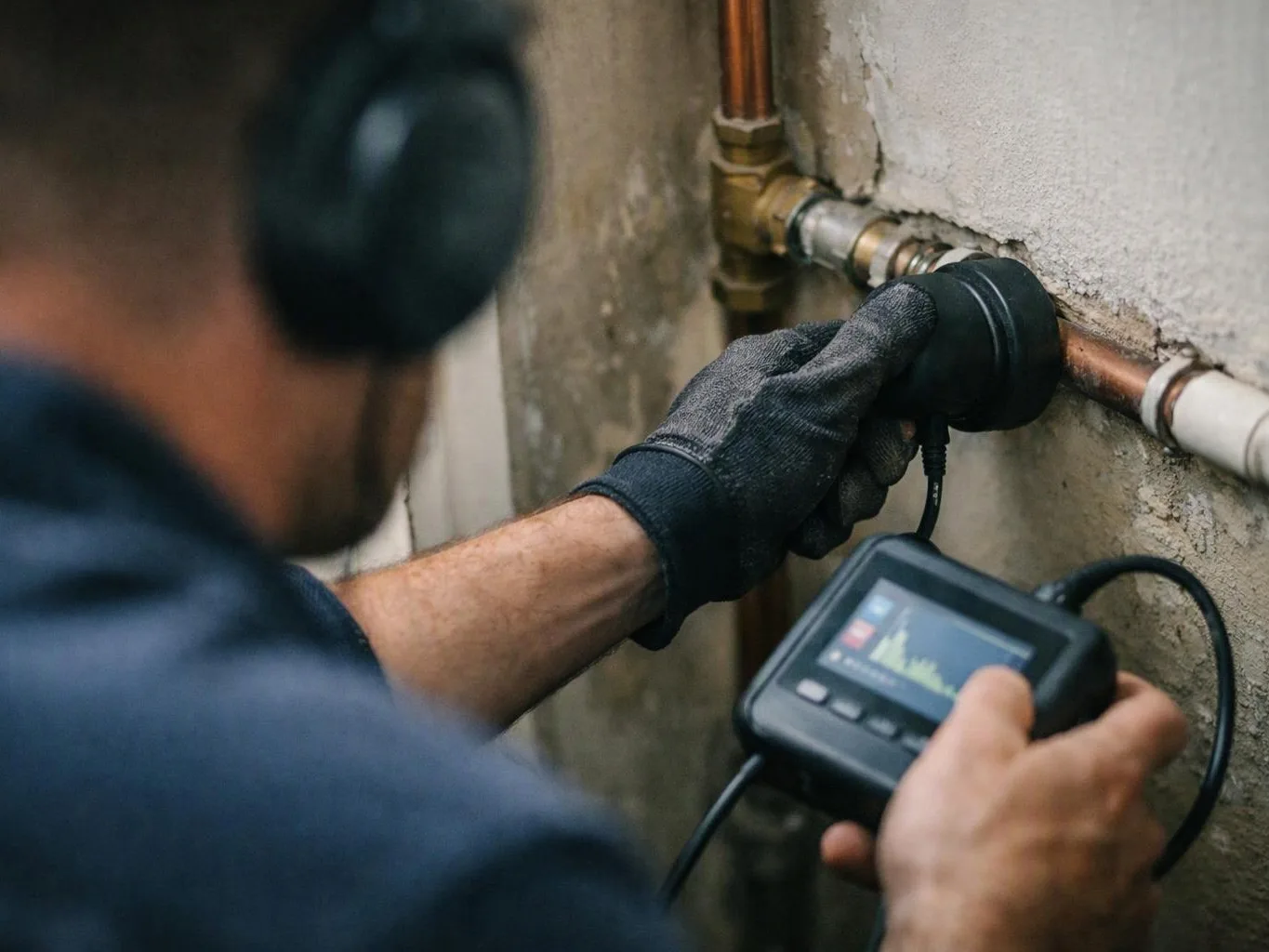
| Acoustic listening equipment | Sound from moving or escaping water | Hidden supply leaks |
| Thermal camera | Temperature patterns near concealed moisture | Walls, floors, and ceilings |
| Moisture meter | Moisture within or near building materials | Confirming damp areas |
| Pressure gauge | Changes in supply pressure | Testing for pressure loss |
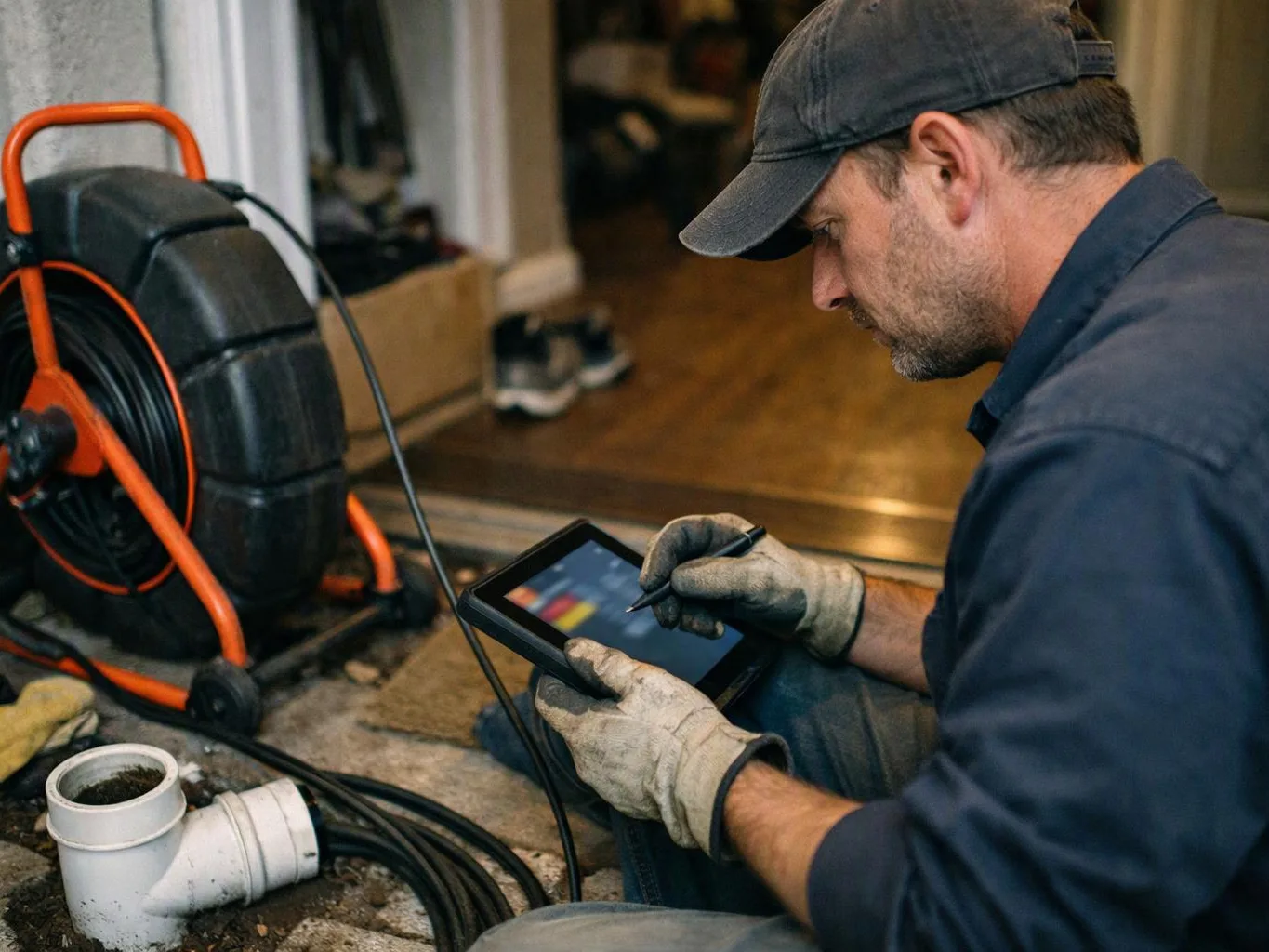
| Inspection camera | Conditions inside an accessible pipe | Pipe and drain inspection |
| Water meter | Unexpected water movement | Checking ongoing water use |
How Can You Tell If You Have a Slab Leak?
A slab leak may cause warm or damp flooring, water sounds below the floor, unexplained moisture, or pressure loss.
A slab leak occurs below or within the concrete foundation. You may notice warm flooring from a hot water line, wet flooring, or water sounds with no visible source.
Floor cracks and foundation moisture can also point to a problem, but they don't prove that a plumbing line is leaking. We use pressure testing, acoustic detection, and other targeted methods to confirm the leak location.
Can Low Water Pressure Indicate a Plumbing Leak?
Low water pressure can indicate a pipe leak, but other system problems can cause the same symptom.
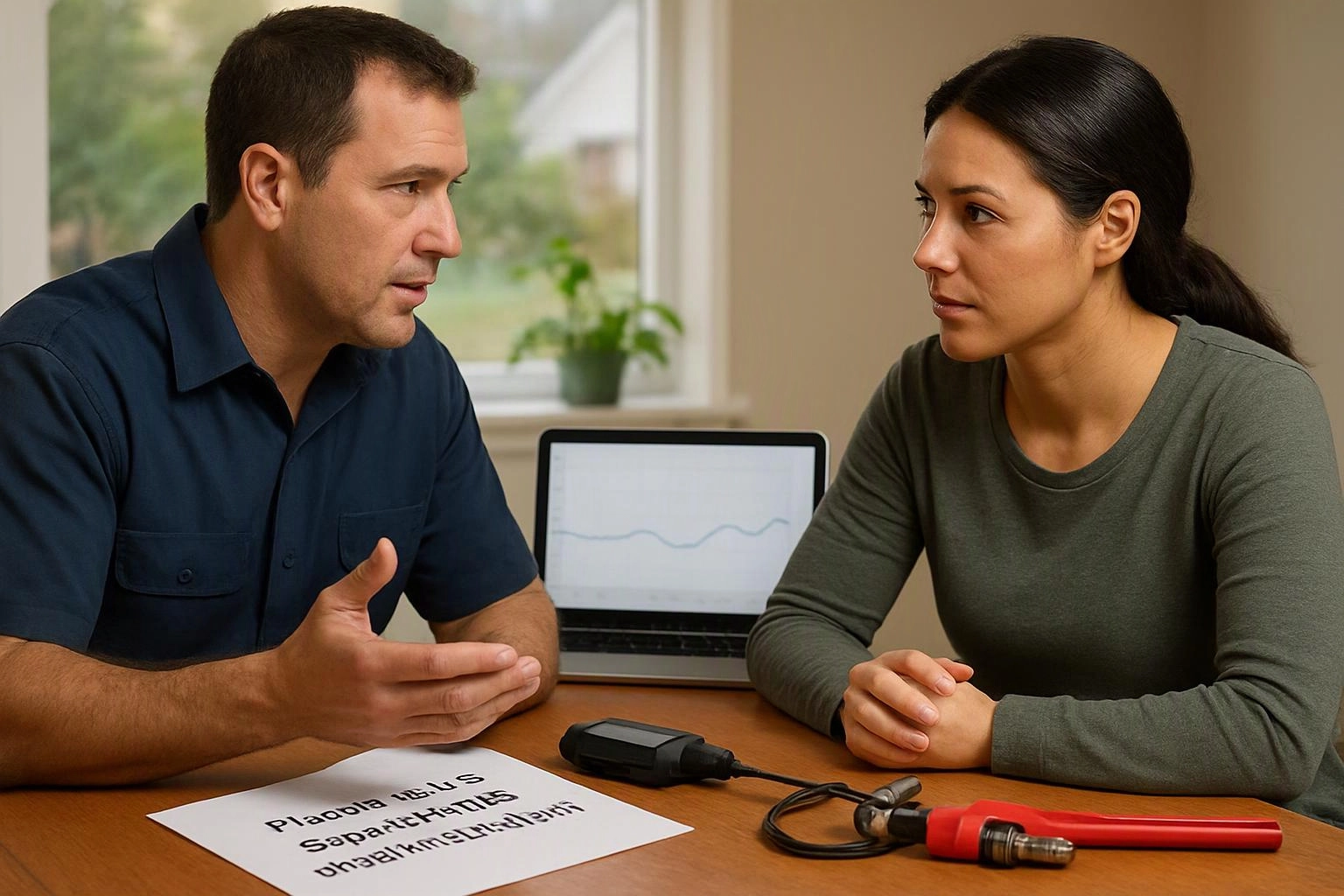
A clogged pipe, failing pressure regulator, or municipal supply issue may reduce pressure. A leak may affect the whole property or only one fixture.
We compare fixture-specific pressure loss with the wider water supply. Pressure testing and water meter checks help separate a leak from a blockage or supply problem.
How Do Leak Detection Methods Compare?
Each detection method reveals a different clue, so we match the test to the leak signs and pipe location.
Non-invasive detection can narrow the repair area before access is considered. Some findings may still require a small opening to confirm the pipe condition.
| Method | Best clue | Main limit |
|---|---|---|
| Visual inspection | Visible stains, dampness, or damage | May not locate concealed water |
| Pressure testing | Loss in a water supply system | May require system isolation |
| Acoustic detection | Sound from escaping water | Background noise can affect results |
| Thermal imaging | Heat or temperature changes | Needs a useful temperature difference |
| Moisture measurement | Moisture in building materials | Shows moisture, not always its source |
| Camera inspection | Visible pipe or drain conditions | Needs suitable pipe access |
What Should You Expect After a Leak Is Located?
The leak source determines the repair options, access point, and repair scope.
We explain whether the issue involves a fixture connection, supply line, drain line, joint, or underground pipe. We also describe possible water damage and the areas that may need access.
Pipe repair may address a reachable damaged section. Slab leak repair may be needed when the leak is below a concrete slab. The quote depends on the confirmed location, pipe damage, access needs, and repair method.
We provide an exact quote after reviewing the findings and planned repair scope. You can contact our team about your leak to arrange the next step.
When Does a Leak Need Pipe Repair or Slab Leak Repair?
Pipe repair is considered when corrosion, a pipe fracture, or joint failure affects an accessible section.
Slab leak repair applies when an underground pipe leaks below or within the concrete slab. We choose the repair path after confirming the leak location and required repair access.
When Should You Schedule Plumbing Leak Detection?
Schedule plumbing leak detection when moisture, water damage, pressure changes, or leak sounds continue without a clear source.
Turn off accessible water controls only if you can do so safely, and avoid opening walls or floors to search for the leak. Plumbing systems may require licensed work and code or inspection review, so our team should handle testing, access, and repair decisions.
Questions About Plumbing Leak Detection
Can a plumbing leak be detected without opening a wall?
Yes, plumbing leak detection can often narrow a hidden leak location without opening a wall. We use water meter checks, pressure testing, acoustic detection, thermal imaging, and moisture readings before considering access.
What is the difference between a water leak and a slab leak?
A water leak is escaping water anywhere in a plumbing system, while a slab leak is a leak below or within a concrete foundation. Slab leak signs can include warm flooring, wet flooring, water sounds, pressure loss, and foundation moisture.
Can a hidden plumbing leak cause mold?
Yes, a hidden plumbing leak can create moisture that supports mold or mildew growth. We locate the leak source first, then explain the plumbing repair scope and affected access areas.
Does a plumbing leak always make a sound?
No, a plumbing leak doesn't always make a sound. Small leaks, buried leaks, and leaks behind finished surfaces may be quiet, so water stains, moisture, pressure loss, or rising water use can provide other clues.
What should I do if I hear water behind a wall?
If you hear water behind a wall, stop using nearby fixtures and contact our team for targeted inspection. Don't cut into the wall or handle nearby electrical components, because hidden plumbing and wiring may be present.