Signs Your Home’s Pipes May Be Failing
Aging or failing home pipes may show rusty water, low pressure, leaks, stains, corrosion, or repeated pinhole leaks. At PlumbingKentwa.com, we can inspect the pattern and explain whether pipe repair or whole house repiping fits the problem.
Request an EstimateWhat Aging or Failing Home Pipes Look Like
Home plumbing pipes can show warning signs when age, corrosion, pressure, or damage affects the plumbing system.
Aging pipes may develop weak pipe walls, leaking joints, or mineral buildup inside the water supply system. Failing pipes can affect one fixture or create problems across the home, depending on the pipe material and leak location.
Visible damage does not always reveal the full condition of the system. We look at the pattern of symptoms to separate a localized failure from wider deterioration.
Warning Signs Your Home’s Pipes May Be Failing
Failing pipes often give homeowners several clues before a major leak or burst pipe occurs.
One sign may have a simple fixture or valve cause. Several signs together deserve a closer plumbing inspection.
The location and pattern of each sign matter. We use those details to decide whether the problem calls for pipe repair or a broader plan.
Can Rusty Water or Low Pressure Point to Corroded Pipes?
Yes, rusty water or whole-house low water pressure can indicate pipe corrosion, but fixtures, valves, and supply problems can cause similar symptoms.
Rusty or discolored water may come from corroded pipes, disturbed sediment, or a change in the water supply. Low water pressure may result from mineral buildup inside pipes, restricted valves, or a problem outside the home.
Corroded pipes can reduce water flow as their inner surfaces narrow. We compare pressure at different fixtures and inspect accessible pipe sections before recommending work.
Do Repeated Pinhole Leaks Mean You May Need Repiping?
Repeated pinhole leaks can signal broader pipe deterioration, especially when leaks occur in different areas of the home.
A pinhole leak is a small opening through a pipe wall. Recurring leaks can show that the material is weakening across more than one section.
Whole house repiping may fit when pipe wall deterioration, corrosion, and recurring leaks affect much of the plumbing system. We inspect the affected areas and explain whether replacement is justified.
When Does a Pipe Problem Need Repair or Repiping?
A localized failure may suit pipe repair, while recurring leaks and widespread corrosion may point to whole house repiping.
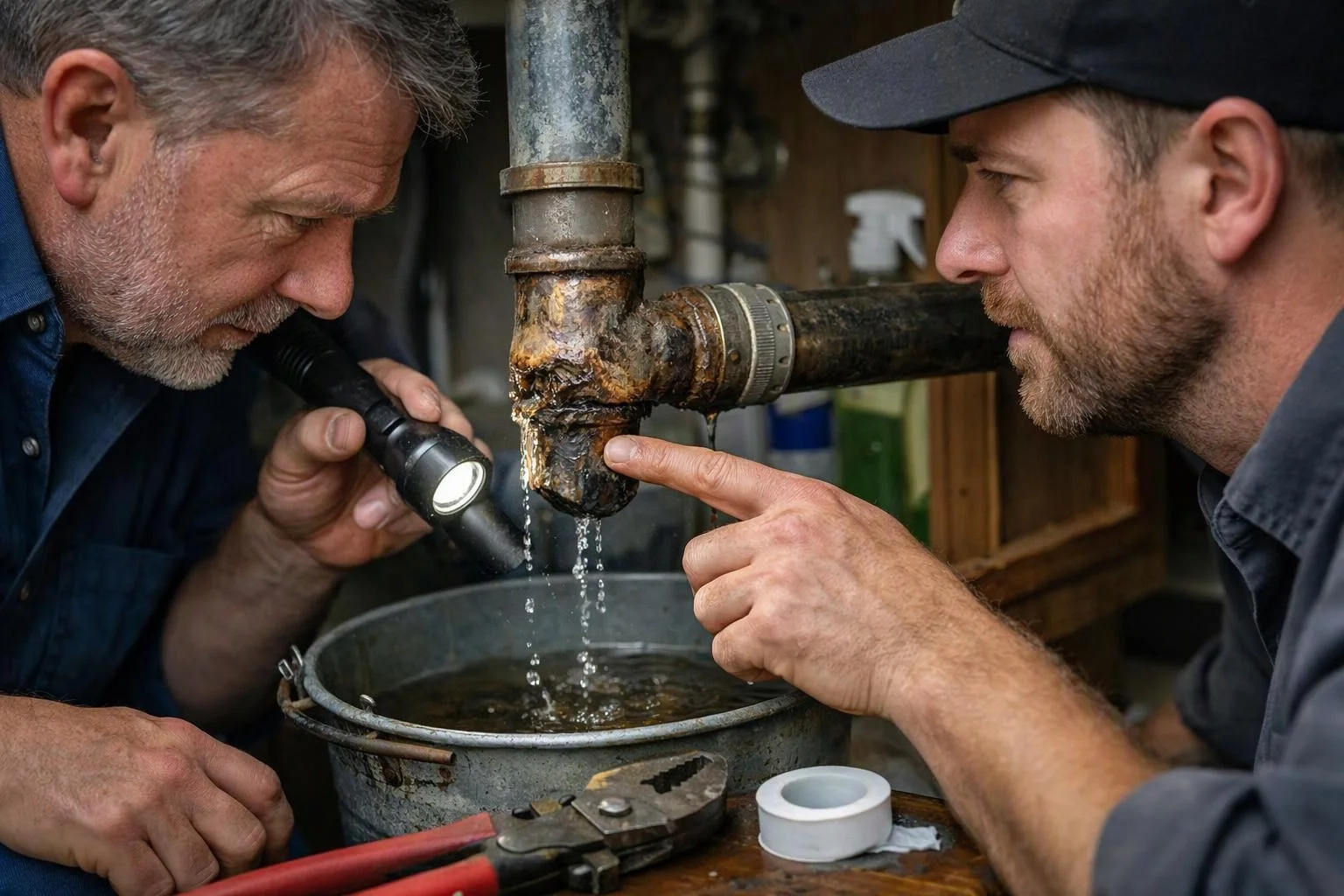
Pipe repair usually addresses a defined leak, damaged joint, or isolated section. The right approach depends on the leak location, pipe material, access, and condition of nearby pipes.
Whole house repiping becomes a stronger consideration when problems appear in different areas or the plumbing system shows broad deterioration. Our plumbing inspection helps connect the visible failure to the condition of the larger system.
For a focused problem, our Pipe Repair service can address the affected section after we assess the cause.
What You Can Check Yourself and What We Check
DIY visual checks can help you spot symptoms, while our team checks the plumbing system’s condition and cause.
You can safely observe visible areas and report changes, but plumbing inspection and pressure testing should be handled by our team when the cause is unclear.
| Factor | What you can do yourself | What we do |
|---|---|---|
| DIY visual checks | Look for damp areas, stains, rust, or visible dripping near accessible pipes. | Inspect accessible pipe sections, joints, valves, and signs of corrosion. |
| Water meter observation | Check for unexplained water use when fixtures are off. | Use your observations with other findings to narrow the leak location. |
| Leak inspection | Note where water appears and whether the problem returns. | Trace the leak and assess nearby pipe condition. |
| Pipe corrosion assessment | Record visible discoloration or flaking without disturbing the pipe. | Assess corrosion patterns and whether damage appears localized or widespread. |
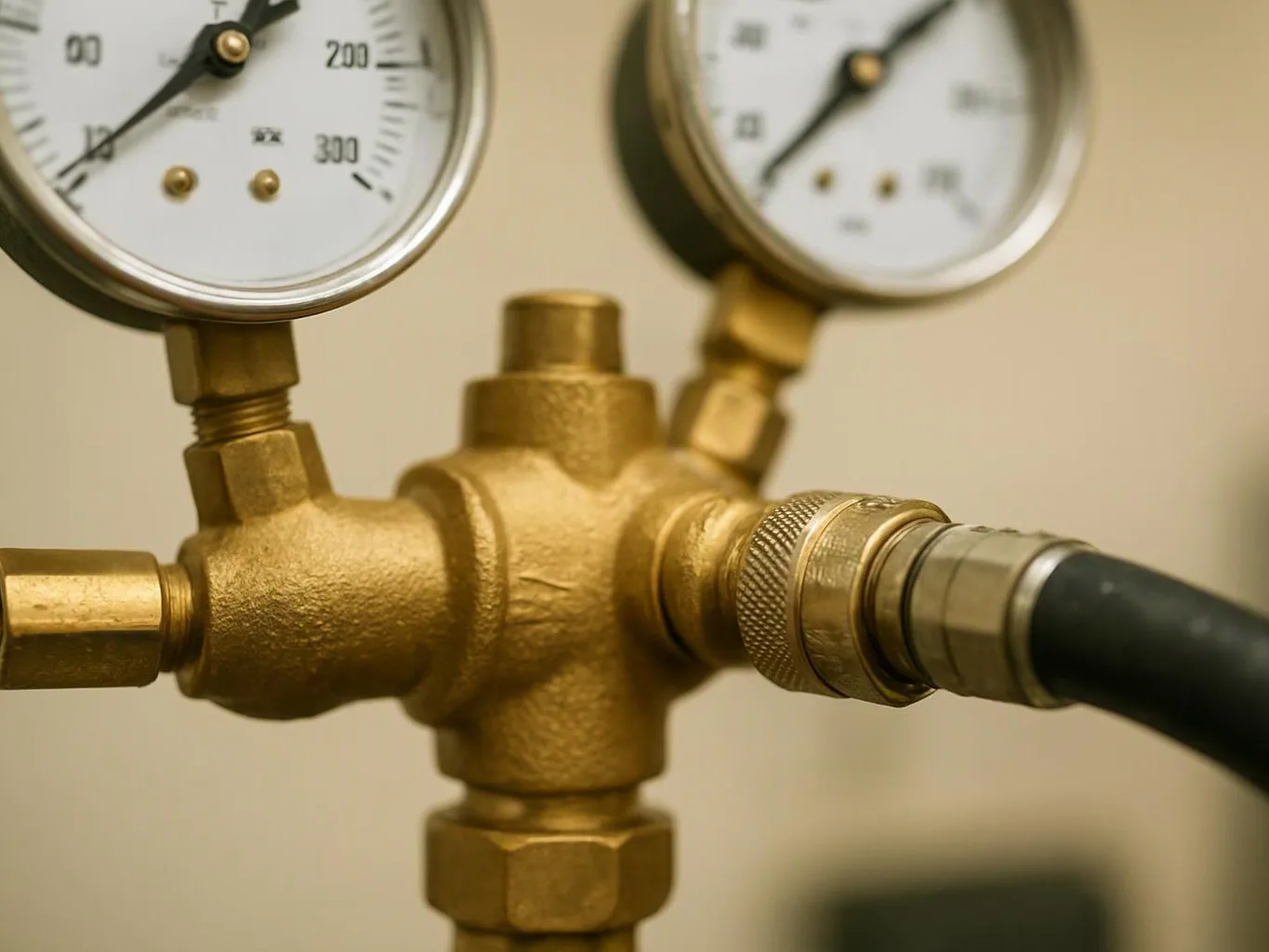
| Water pressure testing | Compare how strong the flow feels at different fixtures. | Test pressure and check valves, fixtures, and supply conditions. |
| Repair decision | Gather photos and details about prior leaks or repairs. | Recommend pipe repair or whole house repiping based on the findings. |
Do not open walls, disturb corroded pipes, or attempt work that could worsen a leak. Our team can assess hidden risks and explain the safest service path.
How We Assess Aging or Failing Home Pipes
Our plumbing inspection connects visible pipe condition, leak location, water pressure, and pipe material.
We begin with the symptoms you noticed and inspect accessible parts of the plumbing system. We look for corrosion patterns, damaged joints, restrictions, and signs that water has reached nearby materials.
We also compare pressure and flow across fixtures when those symptoms are present. Our repair recommendation reflects the condition we can confirm, the extent of the damage, and the likely cause.
When replacement is appropriate, we explain the Whole House Repiping option and what the work would address.
What to Do When a Pipe Fails Suddenly
A burst pipe needs quick action to limit water damage and protect the home.
Use only controls you can reach safely, and avoid electrical hazards or unstable areas. Call our team for emergency pipe repair when the leak cannot be safely controlled.
Our crew can locate the failure, control the damaged section, and explain the repair options. Sudden pipe damage can require a broader inspection when the pipe material shows other weak areas.
Choose the Right Next Step for Your Pipes
The right next step depends on whether the failure is localized or part of a wider plumbing problem.
Pipe repair can fit a defined leak or damaged section. Burst pipe repair addresses sudden failures, while whole house repiping may fit recurring leaks and widespread corrosion.
We can perform a plumbing assessment, explain what we found, and prepare a quote based on the pipe material, access, leak location, and scope of work.
Contact our team to discuss the warning signs in your home and the next practical step.
Questions About Failing Home Pipes
Can one leaking pipe mean the rest of the plumbing is failing?
One leaking pipe does not prove that the rest of the plumbing is failing. The leak may be a localized failure, but our team checks nearby pipes for matching corrosion, age-related damage, or recurring problems.
Can pipe corrosion affect hot and cold water differently?
Yes, pipe corrosion can affect hot and cold water lines differently. Heat, pipe material, water chemistry, and mineral buildup can change how each line behaves, so our team compares both systems when symptoms differ.
Should you replace old pipes after a burst pipe?
Old pipes do not always need full replacement after a burst pipe. Our team checks the failed section, pipe material, corrosion pattern, and history of recurring leaks before recommending pipe repair or whole house repiping.
What should you do if rusty water appears after plumbing work?
Rusty water after plumbing work can result from disturbed sediment or corrosion inside the pipes. Avoid drinking discolored water until the cause is clear, and contact our team if the color continues or returns.