Sewer Line Repair or Replacement: How to Compare Your Options
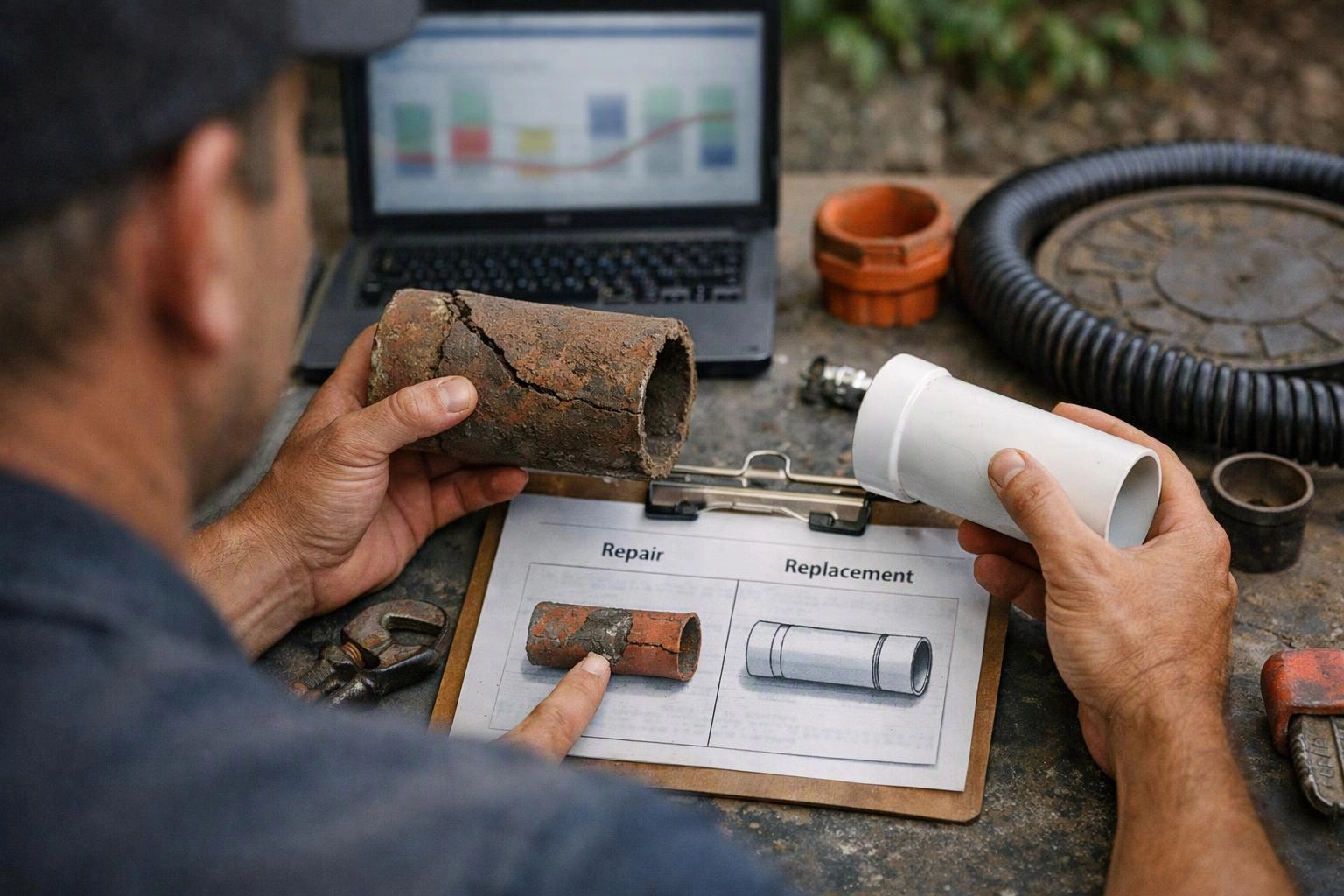
Sewer line repair usually fits localized damage, while replacement suits widespread, repeated, or structurally failing damage. PlumbingKentwa.com uses a sewer camera inspection to assess the line and explain which option fits the condition, access, and long-term goals.
Request an EstimateSewer Line Repair vs Replacement at a Glance
Sewer line repair addresses a limited problem, while sewer line replacement removes and renews a larger failing section or the full line. The right choice depends on the damage location, pipe condition, property access, maintenance needs, and long-term reliability.
| Factor | Sewer Line Repair | Sewer Line Replacement | What Guides the Choice |
|---|---|---|---|
| Best for | Localized damage and sound surrounding pipe | Widespread damage or a collapsed sewer line | The inspection findings |
| Cost drivers | Repair scope, access, and restoration needs | Replacement scope, depth, method, and restoration | Site conditions and required work |
| Maintenance | Keeps more of the existing sewer pipe | Renews a failing section or full line | Pipe condition and future risk |
| Project timeline | Usually a narrower project scope | Usually a broader project scope | Access, excavation, method, and inspections |
When Sewer Line Repair Is the Better Fit
Sewer line repair is usually the better fit when the damage is limited and the surrounding pipe remains sound. A localized crack, small break, root intrusion, or damaged pipe joint may only need a targeted solution.
Our team uses a sewer camera inspection to locate the problem and review nearby sections. That video inspection helps us separate a single defect from a broader pipe condition issue.
For more details about this option, see our Sewer Line Repair service page.
Advantages of Sewer Line Repair
Targeted repair can address a defined defect without renewing every part of the line. Our crew matches the repair access and method to the location shown during inspection.
Best for: localized damage with a sound surrounding sewer line.
When Sewer Line Replacement Is the Better Fit
Sewer line replacement is usually the better fit when damage is widespread, repeated, collapsed, or likely to continue through the existing line. A collapsed pipe, multiple defects, corrosion, or recurring sewer backups can point to a broader failure.
Pipe material also matters because some materials may have age-related weaknesses or repeated joint problems. Our team may review a trenchless replacement option when the site and pipe condition support that method.
Advantages of Sewer Line Replacement
Replacement renews the affected wastewater infrastructure when spot work would leave major defects in place. The replacement scope depends on the failed section, connections, access route, and selected method.
Best for: widespread damage, a collapsed sewer line, or repeated failures across the line.
What a Sewer Camera Inspection Can Show
Yes, a sewer camera inspection can show the damage location, pipe condition, and blockage type that guide the repair decision. A camera scope travels through an access point and records the inside of the line.
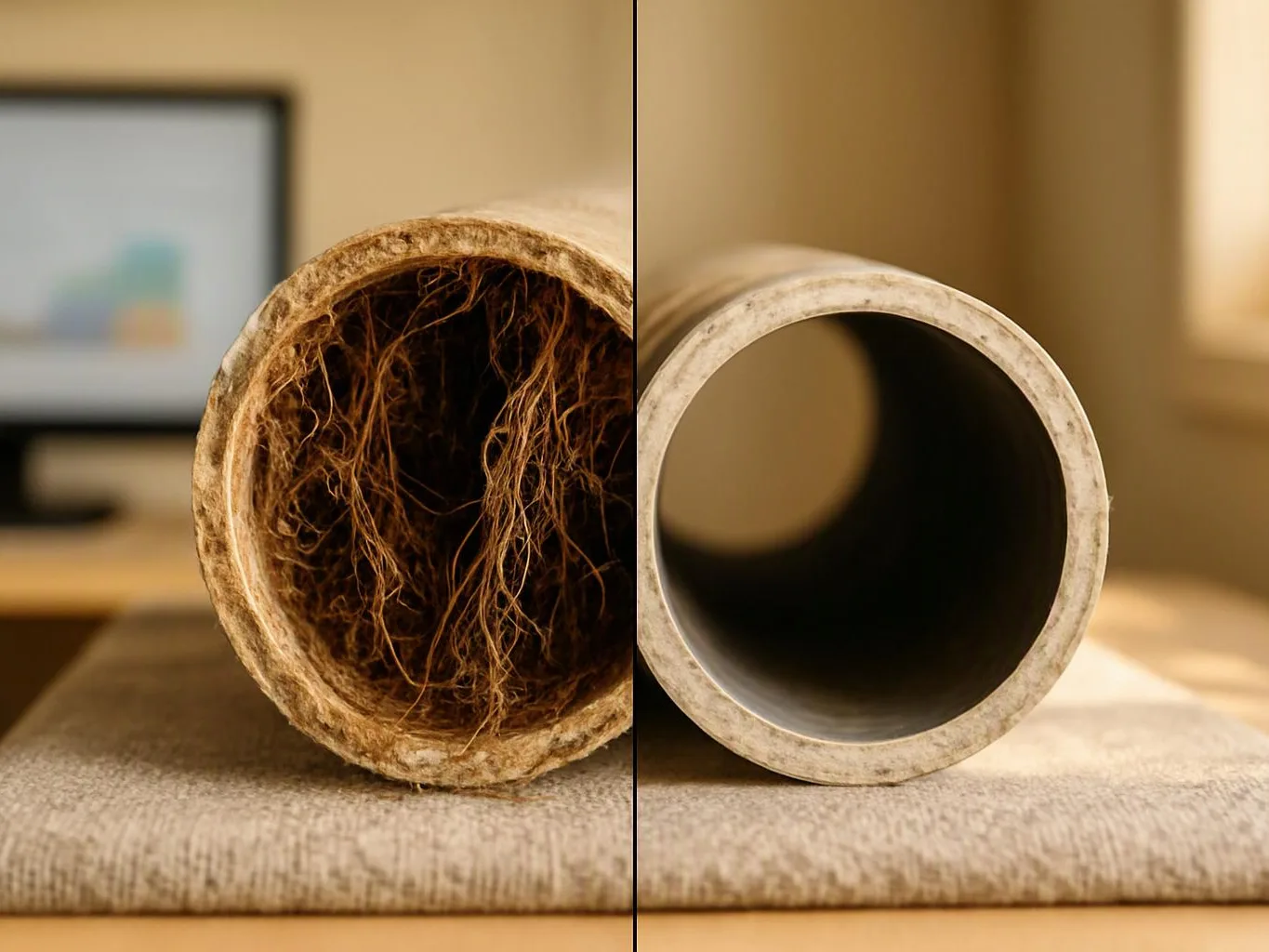
Our team looks for a blockage, crack, root intrusion, pipe belly, offset joint, or collapsed pipe. We also use the inspection to help confirm pipe location and understand how property access may affect the work.
The findings help define the repair scope or replacement scope. They also help identify inspection requirements before work begins.
How We Decide Between Repair and Replacement
Our team uses the sewer camera inspection and site conditions to choose the option that fits the actual damage. We explain the findings before preparing an estimate.
What Changes the Sewer Line Repair or Replacement Estimate
The estimate depends on the damage, pipe access, repair method, excavation needs, property restoration, and required inspections. Our team reviews these factors together because one site condition can change the full repair scope.
Damage extent, pipe depth, and pipe material affect the work involved. Access conditions may support a trenchless method, while other sites may require open excavation.
Landscaping, hardscape, permits, and inspection requirements can also affect the project. We explain what the estimate includes and how to request an exact quote from our team.
Signs a Main Sewer Line May Be Blocked
A main sewer line blockage can cause several slow drains, sewer backups, gurgling drains, sewage odors, or toilet overflow. These signs often appear across more than one fixture because the main line carries wastewater from multiple connections.
A drain blockage in one fixture may have a smaller cause, but wastewater flow problems across the property deserve prompt attention. Stop adding water when sewage backs up, and keep people and pets away from wastewater exposure.
What to Do When You Notice Sewer Line Problems
Our team can assess sewer line problems safely when a backup or wastewater issue affects the property. Avoid contact with sewage and limit water use until the cause is checked.
Choose the Sewer Line Option That Matches the Damage
The right option is the one that matches the damage shown by inspection and avoids repairing a line that needs broader renewal. A clear estimate should connect the findings to the repair method, access plan, restoration work, and inspection requirements.
Our team protects the property by planning the work around the pipe location and access conditions. Request an estimate when you’re ready to compare the repair scope with the replacement scope.
Questions About Sewer Line Repair and Replacement
Can a sewer camera inspection determine whether I need repair or replacement?
Yes, a sewer camera inspection can help determine whether localized damage needs repair or broader defects need replacement. Our team reviews the video, pipe condition, damage location, and property access before preparing an estimate.
Is trenchless sewer repair an option for every damaged sewer line?
No, trenchless sewer repair depends on the pipe condition, layout, access route, connections, and selected method. Our team checks whether the site supports trenchless work before including it in the estimate.
What happens if sewer line damage keeps coming back after repair?
Recurring sewer line damage can signal wider pipe failure, repeated root intrusion, corrosion, or unstable joints. Our team recommends a new camera inspection to review the full line and compare the repair scope with replacement.
How do plumbers locate damage in an underground sewer line?
Our team uses a video inspection and access points to identify the defect inside the line. We then relate the camera findings to the property layout so the damaged section can be reached with the right method.