What to Expect From a Sewer Camera Inspection
A sewer camera inspection process uses a drain camera to view the inside of a sewer line, locate trouble spots, and document findings. At PlumbingKentwa.com, we check the line, explain the video, and connect the findings to practical next steps.
Request an EstimateWhat Is a Sewer Camera Inspection?
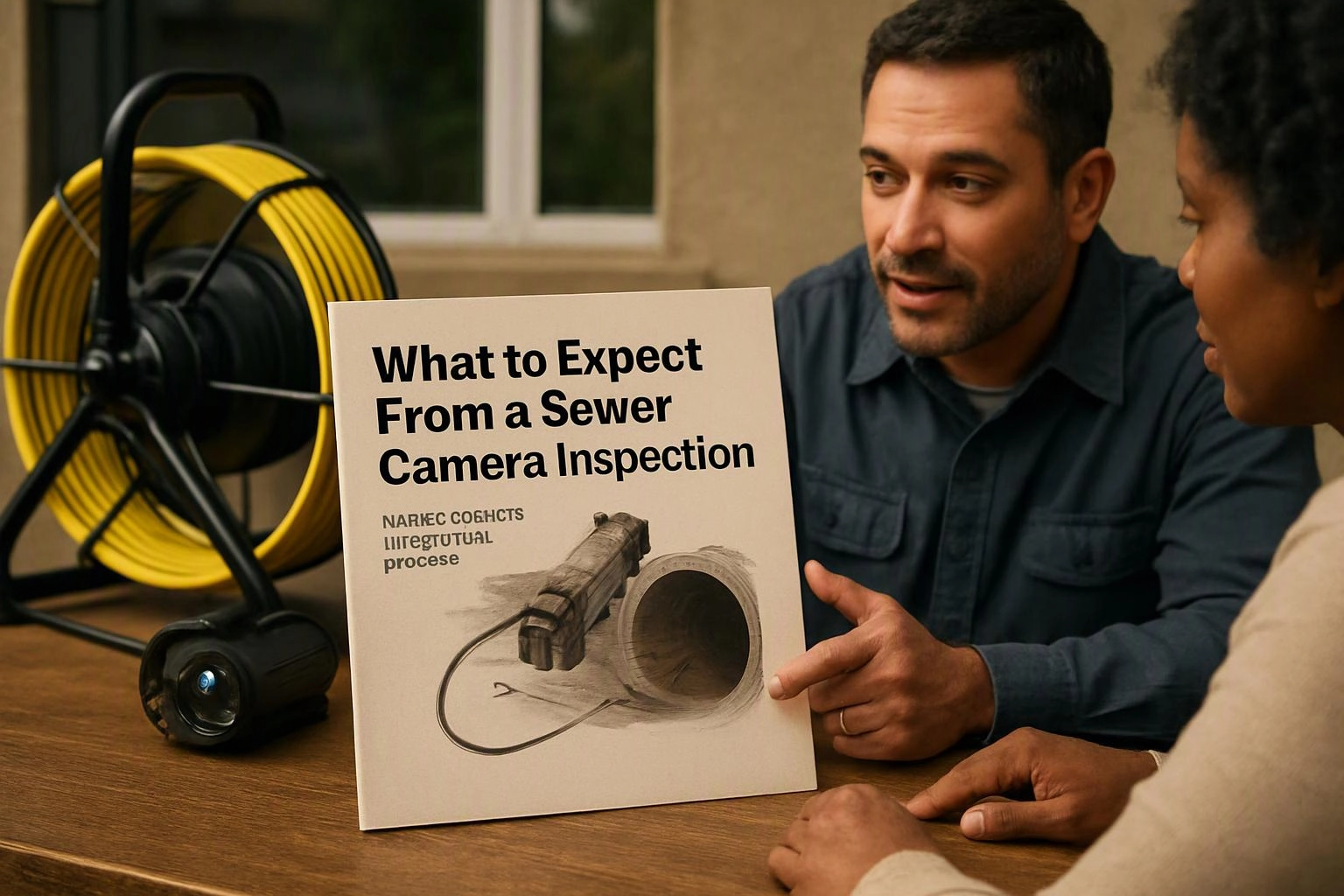
A sewer camera inspection is a plumbing diagnosis that shows the condition, location, and cause of sewer line problems. We guide a drain camera through the pipe to view the pipe interior without opening the entire line.
The camera can show a blockage, damage, or changes in the pipe walls. This video inspection gives our team useful evidence for deciding what service the sewer line needs next.
Our Sewer Camera Inspection service connects the pipe view with practical repair planning.
How the Sewer Camera Inspection Process Works
The sewer camera inspection process moves a camera through an accessible sewer line, records the pipe interior, and connects visible defects to the next service decision.
The camera head sends an image to a video monitor as our crew moves the push cable. We watch for changes in the pipe, flow problems, and areas that may need closer review.
What to Do Before the Inspection
Customers can prepare by clearing access, sharing symptoms, and keeping the inspection area safe and available.
Good preparation helps us reach the sewer line access point and understand what the drains have been doing. Please share when symptoms began and which fixtures are affected.
What Preparation Does the Sewer Line Need?
Sewer line preparation depends on access, debris, standing water, and whether buildup blocks the camera view.
We assess the line before choosing a preparation step. Drain cleaning may clear a simple blockage, while hydro jetting may help remove heavier buildup that limits camera visibility.
| Line condition | Possible preparation need | Why it matters |
|---|---|---|
| Open line with clear access | Camera inspection may begin directly | The camera can move through the pipe and provide a clear view |
| Debris or heavy buildup | Drain cleaning or hydro jetting may be needed | Loose material can block the camera and hide the pipe wall |
| Standing water | Our team may assess flow before continuing | Water can limit visibility and affect how findings are reviewed |
| Limited pipe access | Our team may need to identify another access point | The camera needs a safe route into the sewer line |
Preparation doesn't always mean cleaning the line first. Our team decides based on whether debris or water prevents a useful camera view.
What Can a Sewer Camera Inspection Find?
A sewer camera inspection can find blockages, damage, and changes in the pipe that affect drainage. The camera view may show tree root intrusion, pipe cracks, or pipe breaks.
Our team may also identify a bellied pipe, collapsed sewer line, corrosion, or a misaligned pipe. A foreign object can appear as a separate obstruction inside the line.
These findings help explain recurring backups and slow drains. The video also helps us understand whether the issue affects one area or a larger part of the sewer line.
Should the Sewer Line Be Inspected Before Repair?
Yes, a sewer camera inspection should guide repair planning when the line can be safely accessed and viewed.
A blocked drain doesn't always show the full problem. Camera footage can show the pipe location, damage extent, and conditions that affect the repair method.
Our team uses those findings to discuss sewer repair options clearly. The inspection can also show when cleaning may address the problem and when further work is needed.
What Should the Inspection Report Show?
A useful sewer camera inspection report identifies the observed defect, its location, the pipe condition, and the next service decision.
Our team reviews the video footage with you and explains what the camera could see. The report should separate visible facts from recommended work.
| Report detail | What it explains |
|---|---|
| Video footage | What the camera observed inside the sewer line |
| Defect location | Where the blockage, roots, or damage appears |
| Pipe condition | The visible state of the pipe walls and connections |
| Flow direction | How wastewater moves through the inspected section |
| Recommended next step | Whether the next service may involve cleaning, repair, or more evaluation |
What Happens After the Camera Inspection?
After the inspection, we explain the findings and recommend drain cleaning, hydro jetting, repair, or further evaluation based on the pipe condition.
Our team connects the inspection findings to a clear service recommendation. If repair is needed, the video helps us prepare a quote that reflects the access, location, and damage involved.
If cleaning is suitable, we explain how line cleaning addresses the observed buildup or blockage. If the pipe has structural damage, we discuss sewer repair options and the next planning step.
Questions About Sewer Camera Inspections
Does a sewer camera inspection remove a blockage?
No, a sewer camera inspection shows the blockage but doesn't usually remove it. We may recommend drain cleaning or hydro jetting when buildup prevents clear viewing or proper flow.
Can a sewer camera find tree roots inside a pipe?
Yes, a sewer camera can show tree root intrusion inside an accessible pipe. The video can show where roots enter and how much they affect the sewer line.
What access point is used for a sewer camera inspection?
A cleanout is commonly used for a sewer camera inspection when it provides safe access to the line. Our team checks the available sewer line access and chooses a workable entry point.
Can a sewer camera inspect a line with standing water?
Yes, a sewer camera may inspect a line with standing water, but water can limit camera visibility. Our team assesses the flow and may recommend preparation when the water blocks a useful view.