Whole-House Water Filtration: System Types and What They Address
Whole-house water filtration systems treat water as it enters the home, helping address sediment, chlorine, minerals, odors, or specific contaminants depending on the filter. PlumbingKentwa.com can assess water conditions, household needs, and plumbing layout to guide system selection and installation.
Request an EstimateWhat Is a Whole-House Water Filtration System?
A whole-house water filtration system treats incoming water before it reaches multiple fixtures and appliances. The equipment connects to the main water line, so treatment happens at the point of entry.
Point-of-entry treatment can serve the household plumbing throughout the home. It may help protect faucets, showers, appliances, and drinking-water fixtures, depending on the system design.
What Can Whole-House Water Filters Address?
Whole-house water filters address different water concerns based on their filter media, treatment method, and design. A water test helps match the treatment to the actual contaminant profile.
Our team reviews the water source and household goals before recommending equipment. The table shows common concerns and the systems that may address them.
| Water concern | Treatment that may help | What to consider |
|---|---|---|
| Sediment and turbidity | Sediment filter | Particle size, water flow, and cartridge replacement |
| Chlorine, taste, or odor | Activated carbon filter | Carbon capacity and contact time |
| Chloramine | Catalytic carbon | Media selection and flow requirements |
| Hard water minerals and scale | Water softener or scale-control treatment | Calcium, magnesium, household demand, and maintenance |
| Iron and manganese | Iron filtration or specialty filter media | Concentration, water chemistry, and backwashing needs |
A single filter may not address every concern. Some homes need combined treatment, while others need only sediment removal or carbon media.
Which Types of Whole-House Water Filtration Systems Are Available?
Whole-house systems include sediment, carbon, specialty media, softening, ultraviolet, and combined treatment systems. The right choice depends on the water source, test results, flow rate, and treatment goal.
Common options include sediment filtration, carbon filtration, catalytic carbon, iron and manganese filtration, and a water softener. Reverse osmosis usually treats a selected drinking-water outlet, while ultraviolet disinfection treats water with ultraviolet light and may be part of a broader system.
Multi-stage filtration combines treatments in a planned order. Our team can also help connect buyers with a suitable water filter supplier when equipment selection requires a specific product.
Sediment and Carbon Filtration
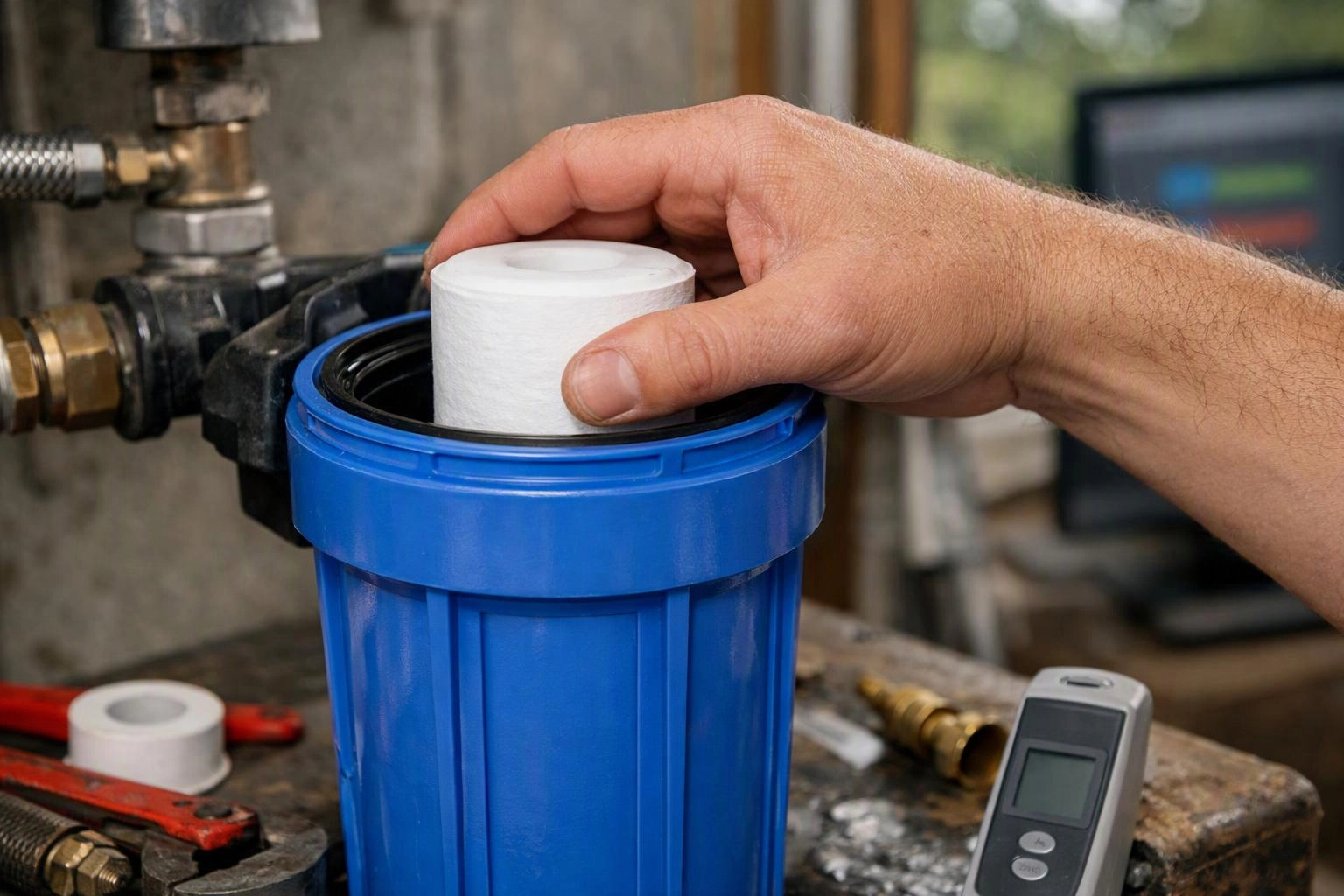
Sediment filtration removes particulate matter such as sand, rust, or other visible particles. An activated carbon filter can reduce chlorine and help improve taste and odor.
Carbon filtration doesn't address every dissolved contaminant. Our team checks the water test, filter media, flow rate, and replacement cartridge needs before selecting carbon equipment.
Softening and Specialty Treatment
A water softener treats hard water minerals such as calcium and magnesium. Softening can help reduce scale that forms inside plumbing fixtures and appliances.
Iron filtration and manganese treatment use specialty filter media selected for the water chemistry. These systems may require control valves, drain connections, or backwashing.
For a deeper comparison, our guide “Water Softener vs. Water Filter: Which Does Your Home Need?” explains how the treatment goals differ.
Why Some Systems Use More Than One Treatment Stage
Multi-stage filtration uses more than one treatment step to address separate water concerns. A pre-filter may capture sediment before a main filter treats chlorine or other targets.
Post-treatment may support a final water-quality goal, but each added stage can affect flow rate and pressure loss. Our team sizes the system around household demand and available water pressure.
How Should You Choose a Whole-House Water Filtration System?
Choose a whole-house filtration system by matching tested water conditions with household demand, treatment goals, maintenance needs, and plumbing limits. A larger system isn't automatically the right system.
Our team uses these checks to guide whole-home filtration choices. We also consider whether the system can be serviced without blocking normal household water use.
Should You Test Your Water Before Installing a Whole-House Filter?
Yes, water testing helps identify the treatment the home actually needs and prevents choosing a filter for the wrong problem.
Private well water may need broader contaminant testing because its quality can change with site conditions. Municipal water users can review their water quality report, then test for concerns that affect the home.
Testing can guide filter selection, media choice, softener settings, and ultraviolet disinfection decisions. Our team reviews test results before planning the plumbing installation.
What Does Whole-House Water Filtration Installation Involve?
Whole-house filtration installation connects the selected treatment equipment to the main water line and includes plumbing, flow, pressure, and leak checks. The work must suit the existing plumbing and applicable code requirements.
Our crew handles the plumbing installation and verifies that the equipment matches the planned water flow. Electrical connections and regulated plumbing work should be completed by licensed professionals.
What Maintenance Does a Whole-House Water Filter Need?
Whole-house filtration maintenance depends on the treatment type, water conditions, filter condition, and manufacturer requirements. Filter replacement is common for cartridge systems, while media systems may need backwashing or media replacement.
Salt-based water softener maintenance can include checking salt levels, cleaning components, and reviewing control settings. A pressure change can signal a loaded filter, restricted flow, or another plumbing concern.
Our team can review the service schedule and help monitor water quality over time. Maintenance should follow the equipment instructions and the home's actual water conditions.
What Should You Include When Requesting a Filtration Quote?
A filtration quote should explain the recommended system, treatment goal, installation work, required connections, maintenance, and replacement parts. Clear scope helps you compare the equipment plan with your water-quality needs.
Share water test results and describe changes in taste, odor, pressure, staining, or scale. Our team uses that information to assess the system type, equipment capacity, installation location, and plumbing connections.
The quote should also address the bypass assembly, drain requirements, electrical needs, replacement media, and maintenance expectations. Ask us to explain how the selected system supports the home's flow rate.
For a complete plan, request Water Filtration System Installation from our team.
Questions About Whole-House Water Filtration
Does a whole-house water filter make water safe to drink?
A whole-house water filter doesn't automatically make water safe to drink because each system targets specific contaminants. Water testing and the selected treatment determine whether the system addresses the home's drinking-water concerns.
How often do whole-house water filters need maintenance?
Whole-house water filters need maintenance according to the filter type, water conditions, pressure changes, and manufacturer requirements. Cartridge systems need replacement, while media systems may need backwashing or media service.
Can one whole-house filter remove every water contaminant?
No, one whole-house filter can't remove every water contaminant. Treatment depends on the contaminant profile, and some homes need multi-stage filtration or separate point-of-use treatment.
What is the difference between a whole-house filter and a water softener?
A whole-house filter targets concerns such as sediment, chlorine, taste, or odor, while a water softener treats hard water minerals. The correct choice depends on the water test and the problem you want to address.
Where should a whole-house water filtration system be installed?
A whole-house water filtration system should be installed on the main water line near the point where water enters the home. Our team also checks service access, drain connections, pressure, flow direction, and available installation space.