Water Softeners: How They Work, Their Benefits, and System Types
Water softeners treat hard water by reducing minerals that cause scale, spots, and plumbing wear. PlumbingKentwa.com explains system types, benefits, maintenance needs, and repair considerations.
Request an EstimateWhat Is a Water Softener?
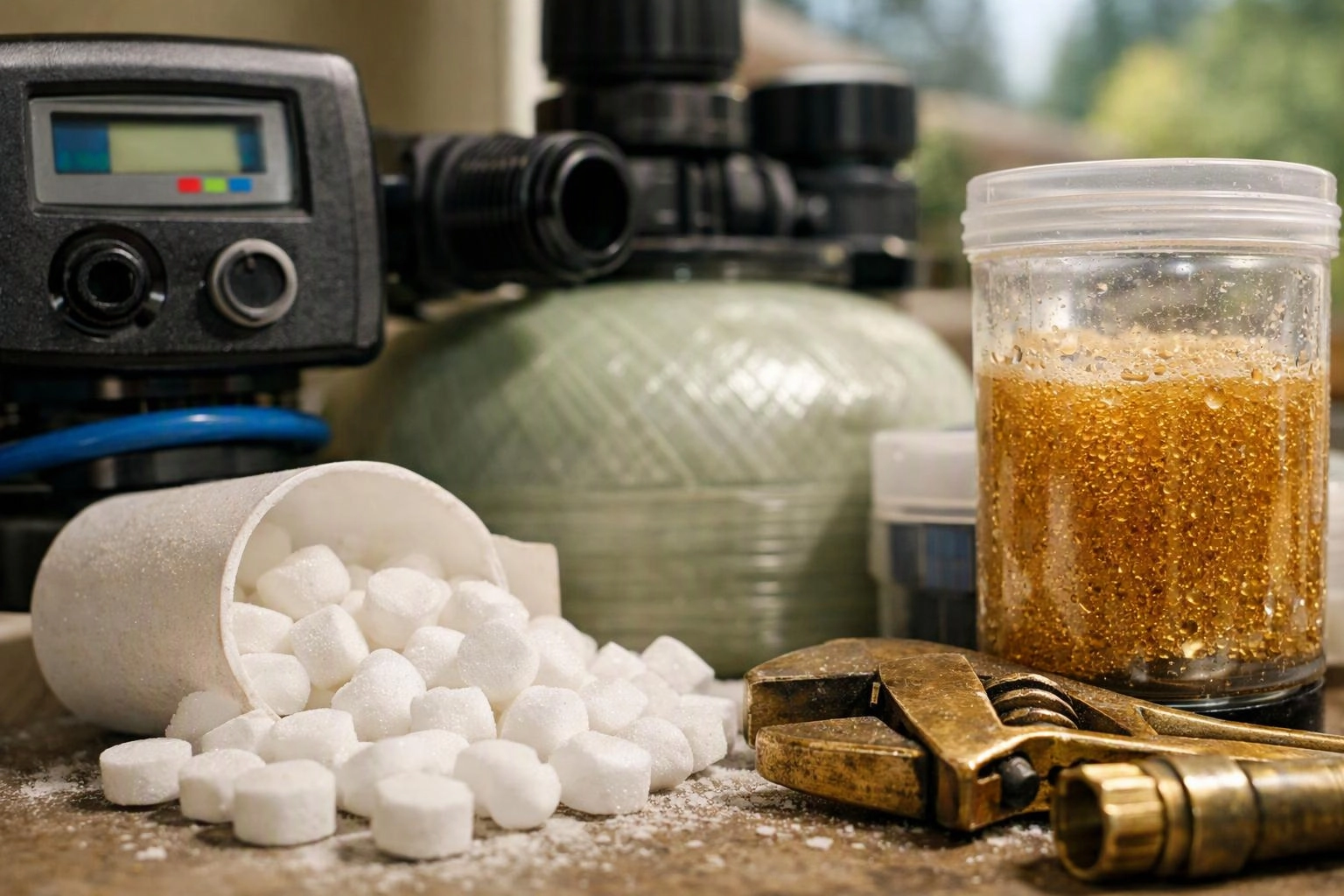
A water softener is a water treatment system that reduces calcium and magnesium from hard water.
These hardness minerals can create mineral deposits on plumbing fixtures, appliances, and surfaces. A softener helps produce softened water for household use, but it doesn't remove every contaminant from drinking water.
Our team can assess the water problem and help you choose equipment that fits your home's plumbing system.
How Does a Water Softener Work?
A salt-based water softener exchanges calcium and magnesium ions for sodium or potassium ions, then regenerates its resin with a brine solution.
Salt dosage, household water demand, and system capacity affect regeneration settings. Our team checks these factors when we assess a water conditioning system.
What Are the Benefits of a Water Softener?
Water softeners help reduce mineral scale, improve soap performance, protect water-using equipment, and make cleaning easier.
Benefits depend on the home's water quality and the equipment's settings. A water softener also needs regular maintenance to keep treating water properly.
What Are the Signs of Hard Water in a Home?
Hard water often leaves white deposits, reduces soap lather, creates soap scum, and causes mineral buildup around fixtures.
Common hard water signs include white spots on dishes, cloudy glass, and residue around faucets. Dry-feeling skin, stiff laundry, and soap that struggles to lather can also point to hardness minerals.
Reduced water flow may signal scale deposits inside a faucet aerator, showerhead, or pipe. A water hardness test can confirm whether calcium and magnesium are causing the problem.
How Does Hard Water Affect Plumbing?
Hard water can form scale inside plumbing and on fixtures, which may restrict flow and increase maintenance needs.
Pipe scale can narrow the path for water and reduce plumbing flow. Scale can also affect faucet aerators, showerheads, valves, and other fixture parts.
A water heater may collect mineral deposits over time. Our team checks fixture performance, visible deposits, connections, and water quality when we assess hard water concerns.
Which Type of Water Softener Is Right for a Home?
The right system depends on the water problem, household demand, available installation space, maintenance preferences, and treatment goals.
| System type | How it treats water | Key considerations |
|---|---|---|
| Salt-based water softener | Uses ion exchange to reduce calcium and magnesium. | Needs salt, regeneration, a drain connection, and routine checks. |
| Salt-free water conditioner | Uses scale-conditioning methods such as template-assisted crystallization. | Helps with scale prevention but doesn't soften water through ion exchange. |
| Dual-tank water softener | Uses two resin tanks to support continuous treated-water service. | May suit homes with higher household water demand or limited interruption tolerance. |
| Magnetic water treatment system | Uses a magnetic field as an alternative conditioning approach. | Doesn't provide ion exchange or remove hardness minerals. |
| Electronic water treatment system | Uses electronic signals as a scale-conditioning method. | Treatment results depend on the water problem and system design. |
A salt-based system is the choice when true softening through ion exchange is the goal. A salt-free conditioner may fit scale prevention goals when mineral removal isn't required.
We can review the options through our water softening equipment supplier service and match equipment to the home's plumbing needs.
What Should You Check Before Choosing a Water Softener?
A water hardness test should guide the equipment choice because system needs vary with water quality.
Our team reviews household water use, system capacity, regeneration settings, and available installation space. We also check the drain connection, plumbing layout, and the home's broader water quality.
These checks help separate hardness treatment from other concerns. A water softener doesn't replace a whole-house filter when sediment, taste, odor, or another contaminant needs treatment.
How Do You Maintain a Water Softener?
Regular maintenance keeps the softener ready to treat water and helps reveal problems early.
Safe exterior checks are reasonable for homeowners, but plumbing connections and electrical controls need qualified service. We handle those checks without asking you to work on regulated equipment.
When Does a Water Softener Need Repair?
A water softener may need repair when hard water returns, regeneration fails, salt use changes, leaks appear, or the control valve stops operating correctly.
A salt bridge can prevent the brine tank from working as intended. Resin failure can also reduce treatment, while a faulty brine valve can disrupt the regeneration cycle.
Our water softener repair process starts with a system assessment. We check the control valve, brine valve, resin condition, bypass valve, drain line, plumbing connection, and signs of a water leak.
We then explain the repair diagnosis and recommend the appropriate correction. Contact us for a quote when equipment condition, access, parts, and plumbing changes may affect the work.
How We Help With Water Softening Equipment
We assess water softening equipment, help select a suitable system, and connect it to the home's plumbing.
Our team reviews water hardness, household demand, installation space, drain requirements, and treatment goals. We explain how each option handles scale, regeneration, maintenance, and water quality.
We also provide water softener repair when a system stops treating water correctly. Our process includes repair diagnosis, equipment checks, plumbing connection review, and a clear quote for the recommended work.
Use our contact page to request an assessment for your water conditioning needs.
Questions About Choosing a Water Softener
Do water softeners remove all contaminants from drinking water?
No, water softeners mainly reduce hardness minerals through ion exchange. A separate filtration system may address sediment, taste, odor, or other water quality concerns.
Does a salt-free water conditioner soften water?
No, a salt-free water conditioner doesn't soften water through ion exchange. It conditions scale-forming minerals and may support scale prevention.
Can a water softener help protect a water heater?
Yes, reducing hardness minerals can help limit scale buildup in a water heater. Results depend on water quality, equipment settings, and proper maintenance.
What happens when a water softener runs out of salt?
When a salt-based water softener runs out of salt, the resin can't regenerate properly. Hard water may return until the brine supply and system operation are restored.
Can a water softener be repaired when hard water returns?
Yes, water softener repair can restore treatment when the cause is repairable. We check salt supply, resin condition, control valve operation, brine movement, leaks, and regeneration settings.
Does Kent have hard water?
Hardness can vary by water source and home, so a water hardness test gives the reliable answer. Our team can use the results to explain whether softening or scale conditioning fits the water problem.