Water Softener vs. Water Filter: Which Does Your Home Need?
A water softener treats hard water and helps protect plumbing, fixtures, and appliances. At PlumbingKentwa.com, we help match a water filter to your water goals, including unwanted substances, taste, and drinking-water needs.
Request an EstimateWhat’s the Difference Between a Water Softener and a Water Filter?
A water softener reduces hardness minerals, while a water filter reduces selected substances from water. These systems address different household water concerns.
Hard water contains calcium and magnesium that can leave scale buildup on plumbing fixtures and appliances. A filter targets water contaminants based on its filter media, such as sediment or chlorine.
Household water treatment starts with your main concern. We look at hardness, taste, odor, drinking water needs, and plumbing protection before recommending equipment.
Water Softener vs. Water Filter at a Glance
A water softener and a water filter solve separate water-quality problems. The comparison below shows which system fits each common goal.
| Concern | Water softener | Water filter |
|---|---|---|
| Hard-water scale | Designed to reduce hardness minerals | Usually doesn't address hardness |
| Chlorine | Not designed for chlorine removal | Some filter media target chlorine |
| Sediment | Not the primary treatment | Sediment filters can capture particles |
| Drinking water | Treats hardness throughout the home | Can target selected drinking-water concerns |
| Whole-house water treatment | Supports scale prevention across plumbing | Can treat water entering the home |
Some homes need both systems because hardness and water quality are separate concerns. The right setup depends on your water testing and treatment goals.
What Does a Water Softener Treat?
A water softener treats hard water by reducing the minerals that cause scale and soap problems. Calcium and magnesium are the main hard-water minerals involved.
Hardness can create scale buildup inside a water heater, water lines, and plumbing fixtures. It can also leave soap scum and make cleaning more difficult.
A salt-based water softener commonly uses a resin tank, brine tank, control valve, and bypass valve. Our team checks the household plumbing and water usage before selecting water softening equipment.
What Does a Water Filter Treat?
A water filter treats specific substances, such as sediment or chlorine, based on its filter media and design. Filter performance depends on the system selected for the water quality concern.
An activated carbon filter can target chlorine, taste, and odor concerns. A sediment filter can address visible particles, while other systems may target different contaminants.
A point-of-use filter serves one fixture, such as a kitchen tap. A whole-house filter treats water at the main water line, so more fixtures receive filtered water.
We can help you compare a whole-house filter, an activated carbon filter, a sediment filter, or a reverse osmosis system. Our Water Filtration System Installation guidance connects the filter design to your actual water goals.
Does a Water Softener Remove Chlorine or Other Contaminants?
No, a water softener isn't designed to remove chlorine or most other contaminants; a suitable water filter handles those goals.
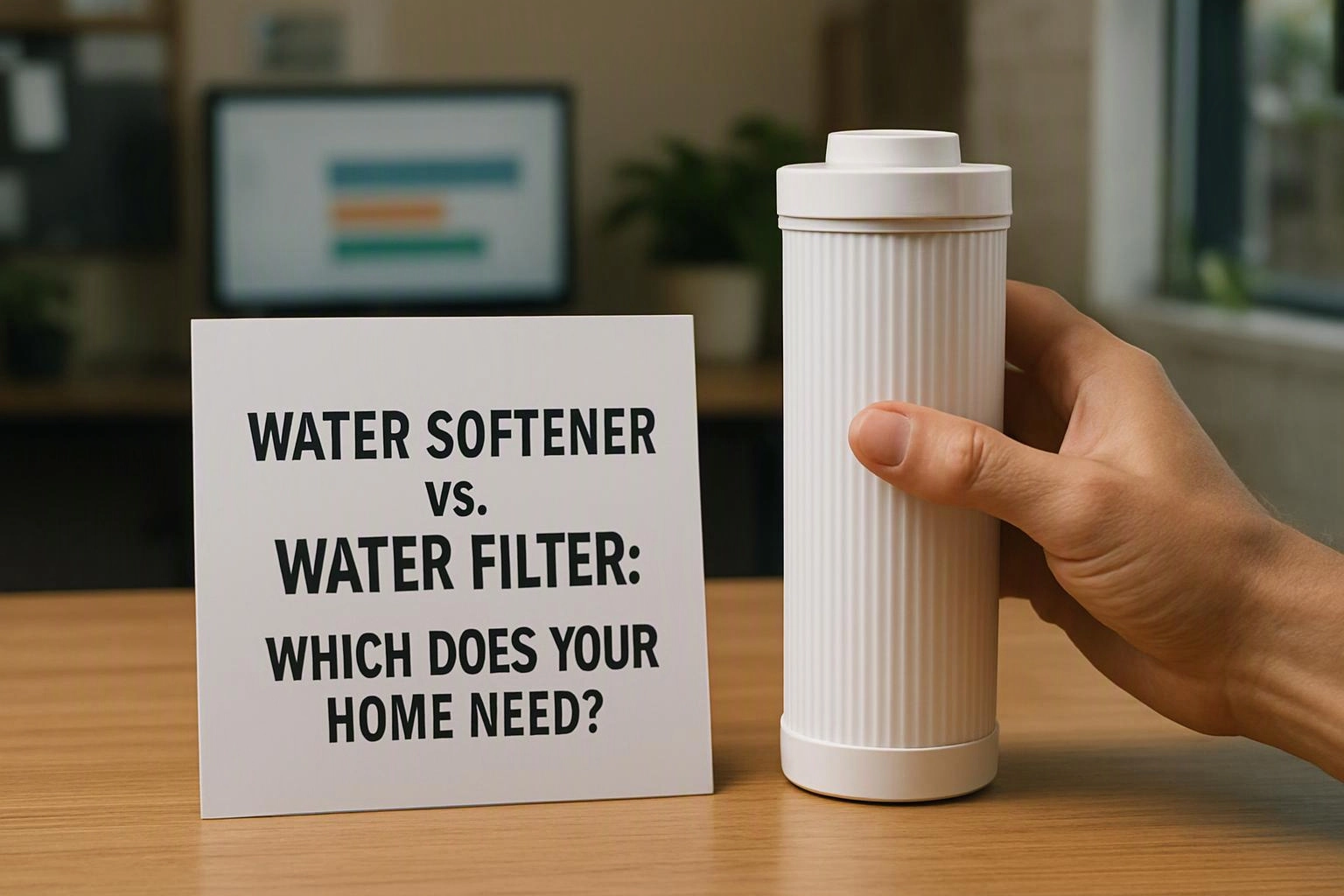
A softener focuses on calcium and magnesium that cause water hardness. A water filter uses selected media to target chlorine, sediment, taste, odor, or another stated concern.
Does a Water Filter Remove Hard Water?
Usually no, a standard water filter doesn't remove the minerals that cause hard water; a water softener addresses that problem.
Most filters can reduce selected substances, but they don't perform the same mineral exchange as a softener. If scale is the main concern, we review water hardness and recommend equipment designed for scale prevention.
Do You Need a Water Softener, a Water Filter, or Both?
Choose a water softener for hardness, a water filter for targeted water-quality concerns, or both when your home has both needs. Your water treatment goals should guide the choice.
We use the following signs to connect the system to the problem:
A whole-house water treatment design can combine equipment when the water requires more than one type of treatment. We select each component based on the water testing and the fixtures it must serve.
How We Match the System to Your Home
We match the system to your water quality goals, plumbing layout, water usage, and installation location. Our process helps prevent a system from being selected for the wrong concern.
Our team checks the completed plumbing connections and system operation before we finish. We also explain maintenance so the equipment continues to support your water quality goals.
What Changes the Cost of a Water Softener or Filter Project?
Project cost depends on the system, treatment goal, plumbing work, installation location, and ongoing maintenance needs.
System type and filtration method affect the equipment selected. Water treatment capacity also matters because the system must match household water usage.
Plumbing changes can affect the work when the water line needs new connections or the installation location has limited access. Replacement filters, salt needs, and system maintenance also affect ongoing ownership costs.
We review these factors before preparing a quote. Our quote explains the selected equipment, planned plumbing work, installation location, and maintenance needs.
When Should You Ask Us to Review Your Water Treatment Options?
Ask us to review your water treatment options when scale buildup, chlorine taste, sediment, or other water quality concerns affect your home.
We can assess whether water softener installation, water filter installation, or a combined system fits the problem. Our team also reviews the plumbing layout, installation location, and system maintenance needs.
Contact us through our contact page to discuss your water treatment goals and request a quote.
Questions About Water Softeners and Water Filters
Can a water softener and water filter be installed together?
Yes, a water softener and water filter can be installed together when the home needs hardness control and targeted filtration. We arrange the equipment in a suitable order and check the water line, installation location, and maintenance needs.
Which system is better for drinking water?
A water filter is usually better for drinking water when the goal involves taste, odor, chlorine, sediment, or selected contaminants. We match the filter media and system design to the water testing and stated concern.
Where should a whole-house water filter be installed?
A whole-house water filter should be installed on the main water line where it can treat water entering the home. We review access, plumbing connections, available space, and the system's service needs before selecting the installation location.
How do I know whether my home has hard water?
Hard water may leave scale on fixtures, create soap scum, and affect water heaters or plumbing. We use water testing and a review of household symptoms to determine whether calcium and magnesium require softening.