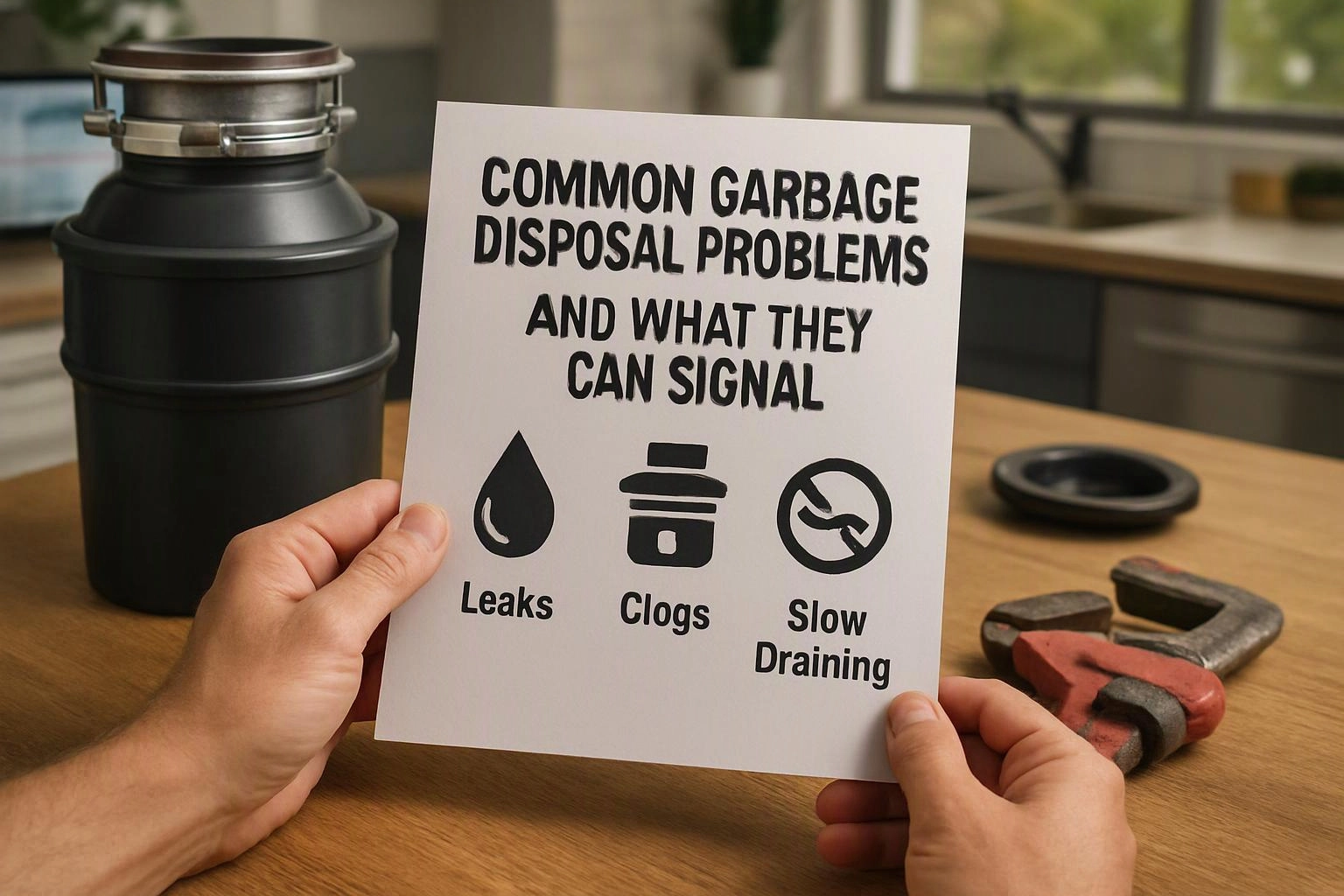
Common Garbage Disposal Problems and What They Can Signal
Garbage disposal problems often point to a jam, drain blockage, leak, electrical fault, or worn component. At PlumbingKentwa.com, we explain the warning signs, safe checks, and when repair or replacement is the better choice.
Request an EstimateWhat Garbage Disposal Warning Signs Can Tell You
Garbage disposal warning signs help identify whether the problem involves power, movement, drainage, leaks, or damaged parts.
The motor drives the grinding chamber, while the drain connection carries water and food waste away. A change in sound, drainage, or water movement can show which part needs attention.
Common Garbage Disposal Problems and Warning Signs
Garbage disposal symptoms often point to a specific system problem. The warning sign can also show when safe troubleshooting has reached its limit.
These signs can overlap, so one symptom doesn’t always identify one failed part. We inspect the full unit and connected drain before recommending garbage disposal repair.
Why Won't the Garbage Disposal Turn On?
A garbage disposal that won’t turn on may have a power problem, tripped protection, or a failed motor.
Check whether the wall switch operates normally and whether the circuit breaker has tripped. You can also look for the reset button on the unit, but don’t reach into the disposal or handle wiring.
If the power supply seems normal and the motor remains silent, the motor or electrical connection may have failed. We can test the system safely and identify whether the fault is electrical or mechanical.
What Does a Humming Garbage Disposal Mean?
A humming garbage disposal usually has power but cannot turn, often because the grinding mechanism is jammed.
Jammed impellers can stop the flywheel while the garbage disposal motor continues receiving power. That condition can place stress on the motor and overload protector.
Turn off power before any visual inspection, and never place your hand inside the grinding chamber. Call us if the jam doesn’t clear safely or if you notice heat, an electrical smell, or repeated shutdowns.
Why Is the Garbage Disposal Leaking or Draining Slowly?
A leaking garbage disposal points to a failed seal or loose connection, while slow draining usually points to a clog in the disposal or drain line.
Water around the top of the unit may come from the sink flange or rubber gasket. Water below the unit may come from the discharge pipe, drain trap, or another plumbing connection.
A partial clog can leave standing water in the sink and make the disposal drain slowly. We trace the water leak and check the drain path before tightening, resealing, clearing, or replacing parts.
A sink backup can involve the disposal or a larger drain problem. If other fixtures also drain poorly, the issue may extend beyond the kitchen disposal.
When Should You Stop Troubleshooting a Garbage Disposal?
Stop troubleshooting when the disposal has an electrical smell, smoke, an active leak, repeated breaker trips, or damage you cannot safely inspect.
Standing water can expose hidden leaks and drain problems. Sharp metal damage can also make further access unsafe.
Turn off the circuit when you see smoke, smell burning insulation, or hear severe grinding. Contact us for garbage disposal repair when the problem involves wiring, internal damage, or unsafe access.
DIY Checks or Garbage Disposal Repair?
Safe visual inspection can help you describe the problem, but electrical testing and plumbing repair require proper training and tools. The comparison below shows where homeowner checks end and our work begins.
Power isolation matters whenever the unit may start unexpectedly. Don’t reach into the disposal or work on wiring while power is connected.
| Factor | What you can do yourself | What we do |
|---|---|---|
| Safe visual inspection | Look for water, loose parts, food buildup, or visible damage without reaching inside. | We inspect the unit, sink area, mounting points, and connected drain. |
| Power isolation | Switch off the wall control and avoid contact with exposed wiring. | We isolate power safely before examining electrical components. |
| Jam diagnosis | Note humming, silence, or unusual movement without forcing the mechanism. | We check the flywheel, impellers, motor, and overload protection. |
| Leak inspection | Dry the area and observe where water returns. | We trace the leak source and assess seals, flanges, pipes, and connections. |
| Electrical testing | Avoid testing live wiring or opening electrical components. | We test the electrical connection and protection devices safely. |
| Plumbing repair | Don’t disconnect pipes or seals if water damage or unsafe access is present. | We repair plumbing connections and restore proper drainage. |
| Garbage disposal repair | Record the symptoms and stop when the unit is unsafe to inspect. | We determine whether repair is safe, practical, and compatible with the sink. |
For electrical or plumbing work beyond a safe visual check, contact us through Garbage Disposal Repair. Our team handles the diagnosis without asking you to work on unsafe components.
How We Diagnose Garbage Disposal Problems
We diagnose the disposal, its electrical supply, its mounting points, and the connected drain before recommending repair or replacement.
Our inspection starts with the reported symptom and a visual review of the kitchen sink area. We then check the electrical connection, drain line, mounting assembly, and likely leak source.
We also assess the unit’s condition and sink compatibility. That assessment helps us explain whether repair is reasonable or whether a replacement unit would provide a safer result.
When Garbage Disposal Replacement or Installation Makes Sense
Garbage disposal replacement makes sense when the unit has major damage, repeated failures, severe corrosion, or a failed motor.
Repair may suit a unit with a limited, accessible fault and sound surrounding connections. Replacement may be better when the grinding chamber, motor, or housing has lasting damage.
During garbage disposal installation, we check sink compatibility, the drain connection, mounting assembly, and electrical connection. We also verify that the new unit drains properly and sits securely.
Our team can explain the work included in the quote, including the condition of connected plumbing and any compatibility concerns.
Questions About Garbage Disposal Problems
Can a garbage disposal cause a sink to back up?
Yes, a garbage disposal can contribute to a sink backup when food waste creates a clog in the disposal or connected drain line. A blockage farther along the drain can also back up the sink, especially when other fixtures drain slowly.
Is a leaking garbage disposal dangerous?
Yes, a leaking garbage disposal can damage cabinets and create an electrical hazard when water reaches wiring or connections. Shut off power if water is near electrical parts, and contact us for an inspection.
Can a garbage disposal smell bad without being broken?
Yes, a garbage disposal can smell bad without a mechanical failure when food scraps remain in the grinding chamber or drain path. A persistent bad smell with poor grinding, slow drainage, or leaks needs further inspection.
Does a garbage disposal need repair or replacement after repeated jams?
Repeated jams can require repair or replacement, depending on the condition of the motor, flywheel, impellers, and grinding chamber. We inspect the unit and connected plumbing before recommending the better option.